Skip to content
American
Freemasons

Menu

South America South American lodge guide

Freemasonry in Paraguay

In 1923, the Symbolic Grand Lodge of Paraguay was installed in Asunción.

2 community guides2 published lodges
All Paraguay lodge listings

Lodges by community

Open a city guide for the published lodge profiles. For wider coverage, use the grand lodge resources below.

2 communities

Official lodge resources

Freemasonry in Paraguay

At a Glance

UGLE-recognized grand lodge
One
Symbolic Grand Lodge of Paraguay
Installed at Asunción on May 13, 1923
Earlier lineage
Gran Oriente del Paraguay, constituted in the 1890s; first lodges 1869
Complication
Two organizations use the same name after a split in 2005
How to tell them apart
By address: the recognized body sits on Avenida de la Victoria
Prince Hall grand lodge
None constituted in Paraguay
Seat
Palacio Masónico, Ytororó and Dr. Benigno Ferreira, Asunción
Working language
Spanish

Paraguay has one recognized grand lodge, the Gran Logia Simbólica del Paraguay, installed at Asunción on May 13, 1923. The complication a visitor has to work around is that two separate organizations carry that exact name, and both describe themselves as regular. The recognized one is identified by its address and by its officers, and the distinction is set out in the recognition section of this page.

Freemasonry arrived in Paraguay with the armies that had just destroyed it. The War of the Triple Alliance, fought from 1864 to 1870 against Brazil, Argentina and Uruguay, killed a very large share of the Paraguayan population, and the first lodges date from 1869, while Asunción was under occupation. A Supreme Council of the thirty-third degree was recorded as installed in the Gran Valle del Paraguay on June 25, 1869. Lodge Fe followed a month later under the Grand Orient of Brazil, and on September 18, 1869 Unión Paraguaya raised columns at Asunción under the Grand Lodge of Argentina, working until 1873.

What those lodges did in a ruined country is the part worth keeping. Lodge Fe established the Asilo Fe, which took in some two thousand people displaced by the war, and it worked against an epidemic in Asunción while sending help to Buenos Aires facing the same disease. The lodge was later raised to capitular rank and divided into four: Fe, Fraternidad Masónica, Asilo de la Virtud and Fede e Lavoro.

The founding dates of the national bodies are not settled. The grand lodge's own history gives August 4, 1894 for the constitution of the Serenísimo Gran Oriente del Paraguay, under a constitution sanctioned on July 30 of that year, and January 3, 1896 for the Grand Orient of Uruguay's recognition of Paraguayan Masonic independence, which commissioned José Segundo Decoud to constitute an independent Grand Orient and Supreme Council. Other accounts within Paraguayan Masonry give 1895 for the Gran Oriente, and the historical museum at Asunción holds founding acts dated 1871 for both the Supreme Council and the Gran Oriente. This page reports the range rather than choosing a year.

From 1894 until 1923 the Gran Logia Simbólica was only the legislative power of the Gran Oriente; executive power lay with the Supreme Council of the thirty-third degree. That arrangement is the root of everything that followed. The Masonic Code was sanctioned on April 30, 1923, and on May 13, 1923 the Symbolic Grand Lodge was installed to govern the first three degrees in its own right, holding executive, legislative and judicial power. The United Grand Lodge of England had recognized the Symbolic Grand Lodge in 1910, and in 1947 the grand lodge was among the founders of the Confederación Masónica Interamericana.

The twentieth century gave the fraternity a Chaco War, from 1932 to 1935, in which Paraguayan Masons served and during which the Masonic temple on calle Palma at Asunción was used as a blood hospital; that same building had served as a relief center during the influenza epidemic of 1918. It was acquired on September 6, 1899 under Grand Master Cecilio Báez, designed by Ricardo Lloret and built by José Vilá, and it is one of the more striking Masonic buildings in South America. The Stroessner dictatorship, from 1954 to 1989, made institutional life difficult, and Paraguayan Masonic accounts describe a slow recovery that gathered pace in the late 1970s and expanded quickly after the return to democracy.

Then it divided. A dispute between the Symbolic Grand Lodge and the Supreme Council over which body governed the other produced a schism in 1996 and a larger one at the end of 2005, leaving two organizations with the same name.

Masonic Paraguay: Key Dates

1869

The first lodges appear under occupation. Lodge Fe under the Grand Orient of Brazil; Unión Paraguaya at Asunción on September 18 under the Grand Lodge of Argentina.

1894

The Serenísimo Gran Oriente del Paraguay constituted on August 4, by the grand lodge's own account.

1899

The Masonic temple on calle Palma acquired on September 6 under Grand Master Cecilio Báez.

1910

The United Grand Lodge of England recognizes the Gran Logia Simbólica del Paraguay.

1923

The Masonic Code sanctioned April 30. The Symbolic Grand Lodge installed May 13 to govern the three degrees in its own right.

2005

A second and larger schism at the end of the year. Two bodies emerge carrying the same name.

2013

UGLE has recognized the newer body. North American recognition follows in 2014 and is restated in 2016.

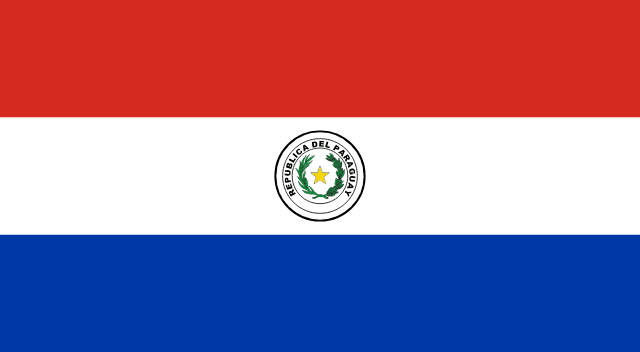
Bilingual jurisdiction
This grand lodge conducts official business in both English and Spanish. Content on this page is in English. A Spanish-language version is planned for future release.

Founded

UGLE Recognized

Recognition

No

PHA Grand Lodge

One Name, Two Bodies

Two organizations in Paraguay use the name Gran Logia Simbólica del Paraguay. Only one is recognized. This is the single most important thing to establish before arranging a visit, and it can be settled by address.

AsunciónRecognized jurisdiction, nationwideSeat of the grand lodge

Where to start

Symbolic Grand Lodge of Paraguay

Installed on May 13, 1923 to govern the first three degrees, out of the Gran Oriente del Paraguay, in which it had until then been only the legislative power.

The recognized body is seated at the Palacio Masónico, Avenida de la Victoria, at Ytororó and Dr. Benigno Ferreira, Asunción. That address is the practical test.

The split

How recognition settled

Paraguayan symbolic Masonry divided in 1996 and again at the end of 2005, in a long conflict between the grand lodge and the Supreme Council of the thirty-third degree over which body governed the other. Both resulting organizations kept the same name.

The United Grand Lodge of England had recognized the newer body by 2013. The Commission on Information for Recognition of the Conference of Grand Masters in North America reached the same conclusion in 2014 and restated it in 2016. Not every grand lodge agrees, so ask your own before you travel.

Freemasonry entered Paraguay with the armies that destroyed it. The War of the Triple Alliance ended in 1870 after killing a large share of the population, and the first lodges date from 1869, while Asunción was under occupation. Lodge Fe was founded by Brazilians under the Grand Orient of Brazil, and Unión Paraguaya raised columns at Asunción on September 18, 1869 under the Grand Lodge of Argentina. Lodge Fe went on to run the Asilo Fe, which fed and housed some two thousand people returning from the war.

Recognition status: United Grand Lodge of England, Foreign Grand Lodges, and the reports of the Commission on Information for Recognition of the Conference of Grand Masters in North America for 2014 and 2016. Founding and seat: Gran Logia Simbólica del Paraguay. Wartime origins: the grand lodge history and the Museo Histórico de la Masonería at Asunción as reported by ABC Color. National outline simplified from Natural Earth public domain boundary data.

Symbolic Grand Lodge of Paraguay

The Gran Logia Simbólica del Paraguay recognized by the United Grand Lodge of England is seated at the Palacio Masónico on Avenida de la Victoria, at Ytororó and Dr. Benigno Ferreira, in Asunción. It governs the three symbolic degrees throughout Paraguay. It was installed on May 13, 1923, and it holds the lineage of the Gran Oriente del Paraguay of the 1890s and of the first lodges of 1869.

Its structure before 1923 explains the trouble that came after. From the constitution of the Gran Oriente in the 1890s until 1923, the Symbolic Grand Lodge was only the legislative power of Paraguayan Freemasonry; the executive lay with the Supreme Council of the thirty-third degree. The installation of 1923 gave the grand lodge all three powers over the craft degrees. Paraguayan Masonic writers on both sides of the later dispute describe the same underlying grievance, that the Supreme Council continued to regard itself as standing above the grand lodge.

That grievance broke twice, in 1996 and again at the end of 2005. The account given to the Conference of Grand Masters in North America in 2008 describes the Supreme Council forcing an elected Grand Master out of office, which read to observers abroad as an appendant body directing a grand lodge rather than the other way around. A group separated, both organizations claimed the name and the lineage, and the international recognition question took years to settle. The Inter-American Masonic Confederation ruled early and was criticized for it. The United Grand Lodge of England had recognized the newer body by 2013. The North American Commission on Information for Recognition concluded in 2014 that it was the only grand lodge in Paraguay meeting the standards for recognition, and restated that in 2016.

Recognition is not unanimous even now. The Grand Lodge of Florida declined to follow, and a visitor should treat their own grand lodge's list as the operative answer rather than any general statement, including this one.

The practical identifiers are the address above, and the officers named in the correspondence. The founding Grand Master of the recognized body was Euclides Acevedo. UGLE's Grand Chancellor, confirming recognition in a letter of 2018 that restated a message first sent in December 2011, named Edgar Caballero Sánchez as the Grand Master then in office and Euclides Acevedo as his predecessor, and described the body as the sole regular and autonomous grand lodge in Paraguay. This page does not name a current Grand Master, because the sources available to us disagree on who presently holds the office.

The grand lodge describes itself as a founding member of the Confederación Masónica Interamericana, constituted in 1947, and a member of the World Conference of Regular Grand Lodges. It has been recognized by a large number of United States grand jurisdictions; the Grand Lodge of New York's recognition was reported as the thirty-first obtained in the United States.

Neither body publishes a roll of lodges with locations, and neither publishes membership figures, so this page gives no lodge count and no distribution. Asunción is the center of activity, and the grand lodge is the place to ask about anything beyond it.

Paraguayan Masonic accounts name a long list of presidents and public men as members, among them Cirilo Antonio Rivarola, Juan Bautista Gill, Cándido Bareiro, Bernardino Caballero, Cecilio Báez, Eduardo Schaerer and Marshal José Félix Estigarribia, president from 1939 to 1940 and the commanding figure of the Chaco War. Estigarribia and Bernardino Caballero are the two named on the Masonic monument the fraternity raised at Luque in 2012. These attributions come from within the fraternity and from the Paraguayan press reporting on it, and this page carries them as such rather than as independently verified lodge records.

Organization details

Institutional name
Gran Logia Simbólica del Paraguay
General email
[email protected]
Official contact
Official contact page
UGLE listing
Listed as recognised by the United Grand Lodge of England

Unverified office or general contact fields are omitted. Use the official contact route above. A local lodge address is not a Grand Lodge office.

UGLE listing checked November 18, 2026. This check is not the original recognition date or a statement of every jurisdiction’s visitation rules.

Sources for these organization details

Visiting Paraguay as a Masonic Traveler

The first thing to do for Paraguay is not to pick a lodge but to confirm a constitution. Two organizations use the name Gran Logia Simbólica del Paraguay. Ask your own grand lodge which one it recognizes, then contact that body directly. The recognized grand lodge is at the Palacio Masónico, Avenida de la Victoria, at Ytororó and Dr. Benigno Ferreira, Asunción.

Asunción is where effectively everything is. It is one of the oldest continuously inhabited cities in South America, founded in 1537, and it is the seat of the grand lodge and the center of Paraguayan Masonic life. Neither body publishes a lodge roll with locations, so a visitor cannot plan a route the way they can in Bolivia or Ecuador; contact in advance is the only reliable method here.

A Masonic historical museum in Asunción is open to the public on Saturdays, according to reporting by the Paraguayan daily ABC Color. It holds around two hundred thousand folios, many of them a century and a half old, including documentation of the first lodges after the Triple Alliance war, and it displays material on illustrious members including Marshal José Félix Estigarribia. Because of the name problem, confirm the venue with the grand lodge before making the trip.

The Masonic temple on calle Palma in central Asunción is worth knowing about as a building. It was acquired on September 6, 1899 under Grand Master Cecilio Báez, later President of Paraguay, designed by Ricardo Lloret and built by José Vilá. It served as a relief center during the influenza epidemic of 1918 and as a blood hospital during the Chaco War. The published account of its history comes from the party to the schism that is not recognized, so a visitor should ask the recognized grand lodge before approaching it as a lodge to visit.

Arriving Masons pass Paraguay's first Masonic monument on the way in. It stands in front of Silvio Pettirossi International Airport at Luque, was raised by Pitágoras No. 17 Lodge with the grand lodge's support, and was inaugurated in 2012 for the bicentennial of independence. It names General Bernardino Caballero and Marshal José Félix Estigarribia.

Beyond Asunción, the Jesuit mission ruins at La Santísima Trinidad de Paraná and Jesús de Tavarangue in the southeast are UNESCO World Heritage sites and the most substantial surviving fabric of the country's colonial period. They have no Masonic connection, and are noted here only because they are the thing most travelers to Paraguay go to see.

Find a lodge in Paraguay

Browse all 2 local listings

Before You Visit a Lodge in Paraguay

  1. Confirm that your grand lodge is in amity with the grand lodge of the lodge you plan to visit. Your own grand secretary has the final word.
  2. Carry your current dues card. Lodges commonly ask visitors to show it.
  3. Contact the lodge secretary ahead of time to confirm the meeting date, time, and dress.
  4. Expect to be examined, or vouched for by a member who has sat in lodge with you.

Appendant Masonic Bodies in Paraguay

The Supreme Council of the thirty-third degree of the Ancient and Accepted Scottish Rite is not a footnote in Paraguay. It is one of the two parties whose long dispute with the symbolic grand lodge produced the schisms of 1996 and 2005, and understanding that is more useful to a visitor than a list of bodies.

A Supreme Council of the thirty-third degree was recorded as installed in the Gran Valle del Paraguay on June 25, 1869, among the first Masonic institutions in the country. From the 1890s until 1923 it held the executive power of Paraguayan Freemasonry while the symbolic grand lodge held only the legislative power, an arrangement the installation of May 13, 1923 was meant to end. Paraguayan Masonic writing on both sides of the later split agrees that the Supreme Council continued to regard itself as standing above the grand lodge, and the account given to the North American recognition commission in 2008 describes it forcing an elected Grand Master from office.

Because of that history, a visitor should not assume that a body presenting itself as Scottish Rite in Paraguay stands in the same relation to the recognized grand lodge as it would elsewhere. Confirm any appendant body contact through the recognized grand lodge before arranging anything.

Beyond the Supreme Council, this page lists no allied bodies for Paraguay. Neither grand lodge publishes a directory of them, and we have found no sourcing for York Rite, Eastern Star or DeMolay activity in the country that meets the standard applied elsewhere on this site. The recognized grand lodge is the place to ask.

Explore More

The Gran Logia Simbólica del Paraguay is recognized by the United Grand Lodge of England and appears on its list of foreign grand lodges. It was installed at Asunción on May 13, 1923, and UGLE first recognized the Paraguayan symbolic grand lodge in 1910.

Two organizations in Paraguay carry that identical name, following a schism in 1996 and a larger one at the end of 2005. Recognition rests with the newer of the two. The United Grand Lodge of England had recognized it by 2013, and the Commission on Information for Recognition of the Conference of Grand Masters in North America concluded in 2014 that it was the only grand lodge in Paraguay meeting the standards for recognition, restating that conclusion in 2016. A letter from UGLE's Grand Chancellor described it as the sole regular and autonomous grand lodge in Paraguay and identified it by its Grand Master and immediate past Grand Master.

The recognized body is seated at the Palacio Masónico on Avenida de la Victoria, at Ytororó and Dr. Benigno Ferreira, Asunción. That address is the clearest practical identifier, and it is the address carried on the recognized grand lodge lists published by American grand jurisdictions.

Recognition of the Paraguayan situation is not unanimous, and at least one American grand jurisdiction has publicly taken a different view. Because both organizations use the same name and both describe themselves as regular, a visitor should treat their own grand lodge's ruling as the operative one and should confirm the address of any lodge before attending. This site does not link to the unrecognized body.

A separate irregular body styling itself the Grand Symbolic Lodge of the Grand Orient of Paraguay is also reported to work in the country. It is not recognized and is not the same thing as either party to the 2005 split.

Sources & References

United Grand Lodge of England, Foreign Grand Lodges. The Symbolic Grand Lodge of Paraguay on the list of recognized foreign grand lodges.

Gran Logia Simbólica del Paraguay, and its account of its own origins. The Gran Oriente del Paraguay of August 4, 1894, the Uruguayan commission of January 3, 1896, the division of powers before 1923, the Masonic Code of April 30, 1923 and the installation of May 13, 1923, UGLE recognition in 1910, and founding membership of the Confederación Masónica Interamericana in 1947.

Diario La Nación, Asunción, and La Tribuna. The schism of November 2005, the earlier schism of 1996, and the dispute between the grand lodge and the Supreme Council of the thirty-third degree, described from within Paraguayan Freemasonry.

Christopher Hodapp, quoting the reports of the Commission on Information for Recognition of the Conference of Grand Masters in North America, including its 2008, 2014 and 2016 reports. UGLE recognition of the newer body by 2013, the 2014 conclusion that it was the only Paraguayan grand lodge meeting the standards for recognition, the 2016 restatement, and the dissent of the Grand Lodge of Florida.

Grand Lodge of Pennsylvania, list of recognized grand lodges. The Avenida de la Victoria address as the identifier carried on an American recognized-lodges list.

ABC Color, Asunción, July 2025. The Masonic historical museum open to the public on Saturdays, its holdings, the arrival of Freemasonry in 1869 with the Brazilians who founded Lodge Fe, and José Félix Estigarribia among the members it displays.

Published Paraguayan Masonic history of the Palma temple. Its acquisition on September 6, 1899 under Grand Master Cecilio Báez, its architect and builder, and its use in the 1918 influenza epidemic and as a blood hospital in the Chaco War. This source is published by the party to the schism that is not recognized; it is cited here only for the building's history, which is not in dispute, and this page takes no position on present ownership.

Secretaría Nacional de Cultura del Paraguay, with the academic study of Afro-descendant memory in Paraguay published in Amelica and Diario Crónica. The three communities, the 2006 and 2007 community census identifying 7,637 people, the 2012 national census count of 3,867 and the question that produced it, the Kamba Kua land expulsion from 1957, and the Red Paraguaya de Afrodescendientes formed in 2008.

Masonic Press Agency, 2012. The Masonic monument at Silvio Pettirossi International Airport, raised by Pitágoras No. 17 Lodge, naming Bernardino Caballero and José Félix Estigarribia.

Skip to content