
Symbols and Regalia
Start with the square and compasses, the apron, and the all-seeing eye. See how each appears on a surviving object, then explore its meaning in lodge practice.
Explore Masonic symbols
Symbols in the Museum
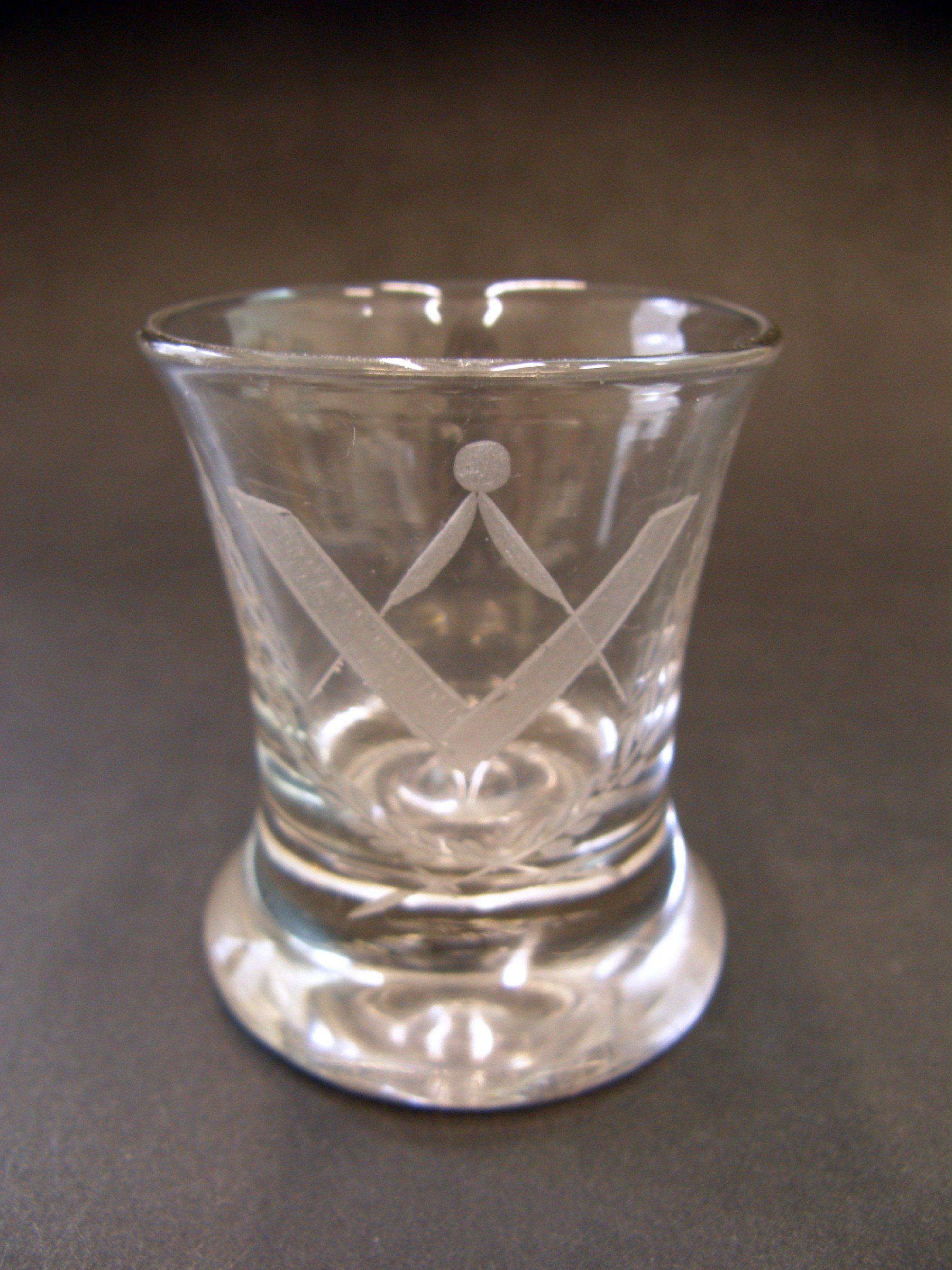 Square and compassesView the masonic firing glass in the MuseumAuckland War Memorial Museum Tāmaki Paenga Hira · CC BY 4.0
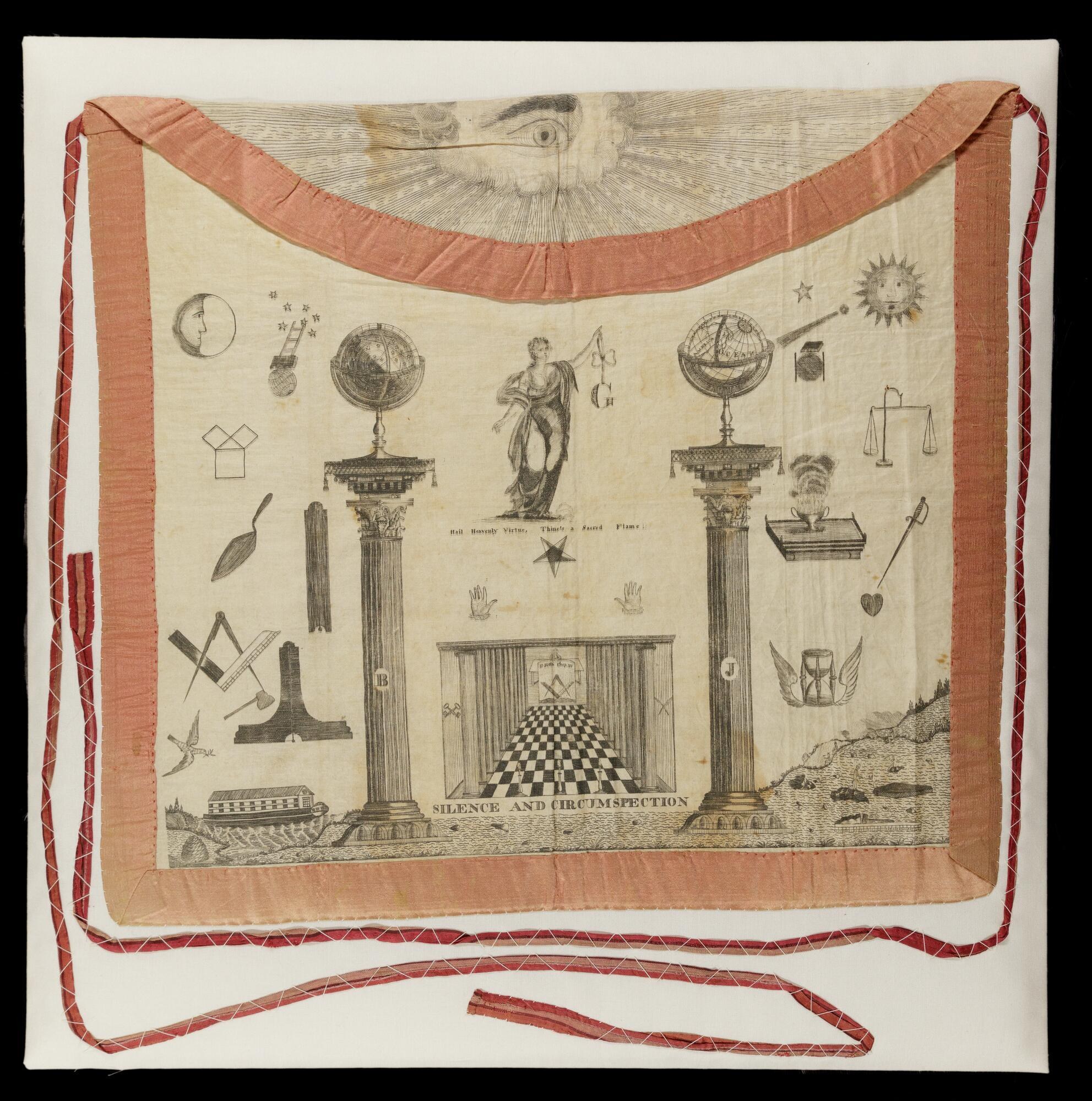 The Masonic apronView the silk apron, 1816–1818 in the MuseumNewberry Library, Rudy Lamont Ruggles Collection
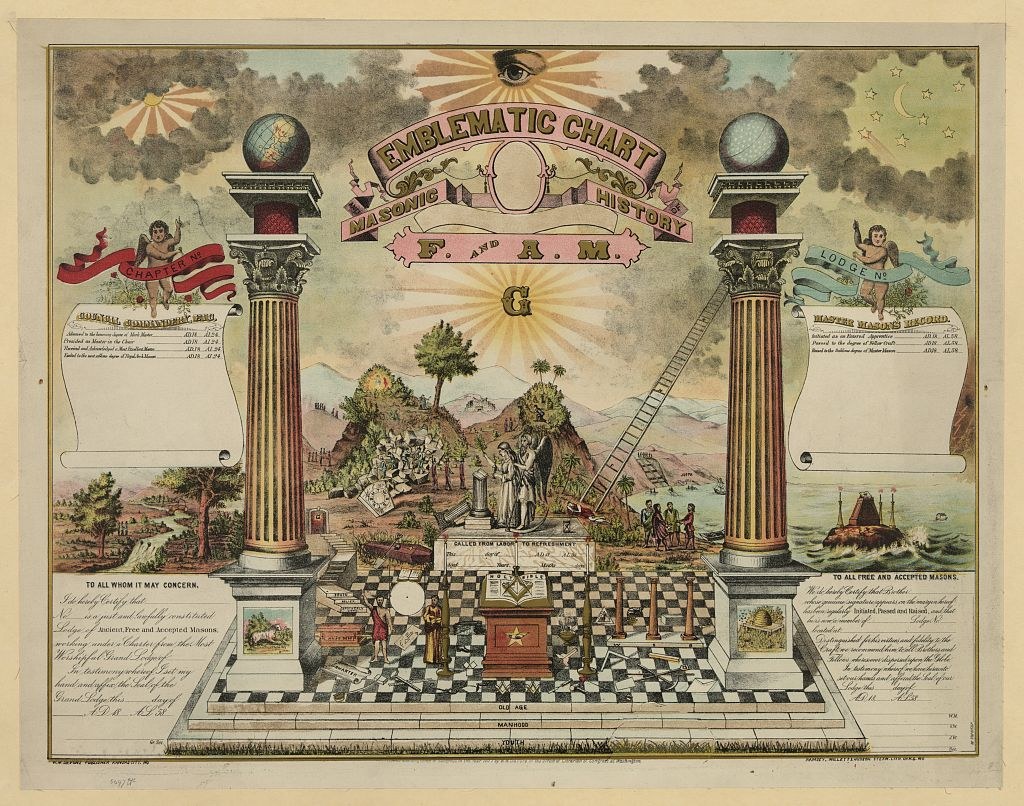 The all-seeing eyeView the emblematic chart in the MuseumLibrary of Congress, Prints & Photographs Division
Quick Answers
Short answers, each backed by a full guide.
What do the square and compasses mean?
They form the chief emblem of Freemasonry, a builder’s square joined with a pair of compasses. The emblem teaches two lessons at once, the first being to square one’s actions by the rule of right conduct.
Read the guide →What is a Masonic apron?
A Masonic apron is the white lambskin badge presented to every Freemason at his initiation, worn at the waist in lodge as an emblem of purity and of honest labor.
Read the guide →What does a Masonic ring mean?
A Masonic ring is worn by a Freemason to show his membership in the Craft, most often set with the square and compasses. It is not conferred as part of the Masonic degrees.
Read the guide →What is the all-seeing eye?
The all-seeing eye, also called the Eye of Providence, is a Masonic emblem of the watchfulness of God, usually shown as a single eye set within a triangle and surrounded by rays of light.
Read the guide →Is the eye on the dollar bill Masonic?
No. The Great Seal’s eye was adopted in 1782, before the all-seeing eye came into common Masonic use, and the Masonic emblem has no pyramid.
Read the guide →What were Boaz and Jachin?
They were two bronze pillars that stood at the porch of King Solomon’s Temple. According to 1 Kings 7:21, Jachin was set on the right and Boaz on the left. Freemasonry adopted the pair as symbols.
Read the guide →Newest first. Every guide is sourced and dated.
The Masonic Bible: What It Is and Why It Lies Open in Every Lodge
What a Masonic Bible is, why the Volume of the Sacred Law lies open in every lodge, what non-Christian Masons swear on, and the Washington Inaugural Bible.
Boaz and Jachin: The Two Pillars of Freemasonry
Boaz and Jachin were the bronze pillars at the porch of Solomon's Temple. What the Bible says, what the names mean, and how Freemasonry uses them today.
The Masonic Apron: Meaning, History, and the Degrees
The Masonic apron is the white lambskin badge every Freemason receives at initiation, an emblem of purity and honest labor. Its meaning, history, and changes by degree.
What a Masonic Ring Means: Symbolism, and How It Is Worn
A Masonic ring shows membership in the Craft, usually with the square and compasses. What it means, which way to wear it, who may wear one, and the main types.
The Square and Compasses: Meaning of Freemasonry’s Chief Emblem
The square and compasses is Freemasonry’s chief emblem. The square teaches right conduct, the compasses restraint, and the G sits at its center in most American lodges.
The All-Seeing Eye (Eye of Providence): Meaning in Freemasonry
The all-seeing eye, or Eye of Providence, is a Masonic emblem of God’s watchfulness. What it means, where it came from, and why the dollar-bill story is misread.
Masonic Symbols and Their Meanings
Masonic symbols teach moral lessons through builders’ tools and Temple imagery: the square and compasses, the all-seeing eye, the letter G, the apron, and the pillars.
Read the symbols alongside the objects
Compare the museum examples above with William Preston’s Illustrations of Masonry for a period account of Masonic instruction.
Every guide is sourced, dated, and reviewed under our Editorial Standards. Spot an error? Submit a correction.