
Wolfgang Amadeus Mozart · 1787
What to listen for
Two weighty chords introduce a slow passage in D minor. Stay with its measured tread long enough to feel how startling the change of pace becomes when the overture turns to D major.
About the work
In this opera with a libretto by Lorenzo Da Ponte, music from the opening returns in the confrontation with the stone guest. Hearing the overture again after the drama gives its first bars a different meaning.
On a second hearing
Compare the first minute with the overture to Figaro. Which gestures make danger audible before a singer has entered?
What does the overture tell us before the curtain rises?
Mozart and Lorenzo Da Ponte brought Don Giovanni to Prague in 1787. The title character moves through much of the opera by changing the subject, impersonating someone else or leaving someone else to explain. The opening D-minor chords let the audience hear the one presence he will eventually have to face.
Listen with the score
Listen for the change from the slow introduction to the quick D-major music. A change of speed, key and articulation can make the same orchestra seem to inhabit a different room. Later, when the stone guest comes to supper, recall the weight of those first chords. What sounded like a warning at the start now has a voice.
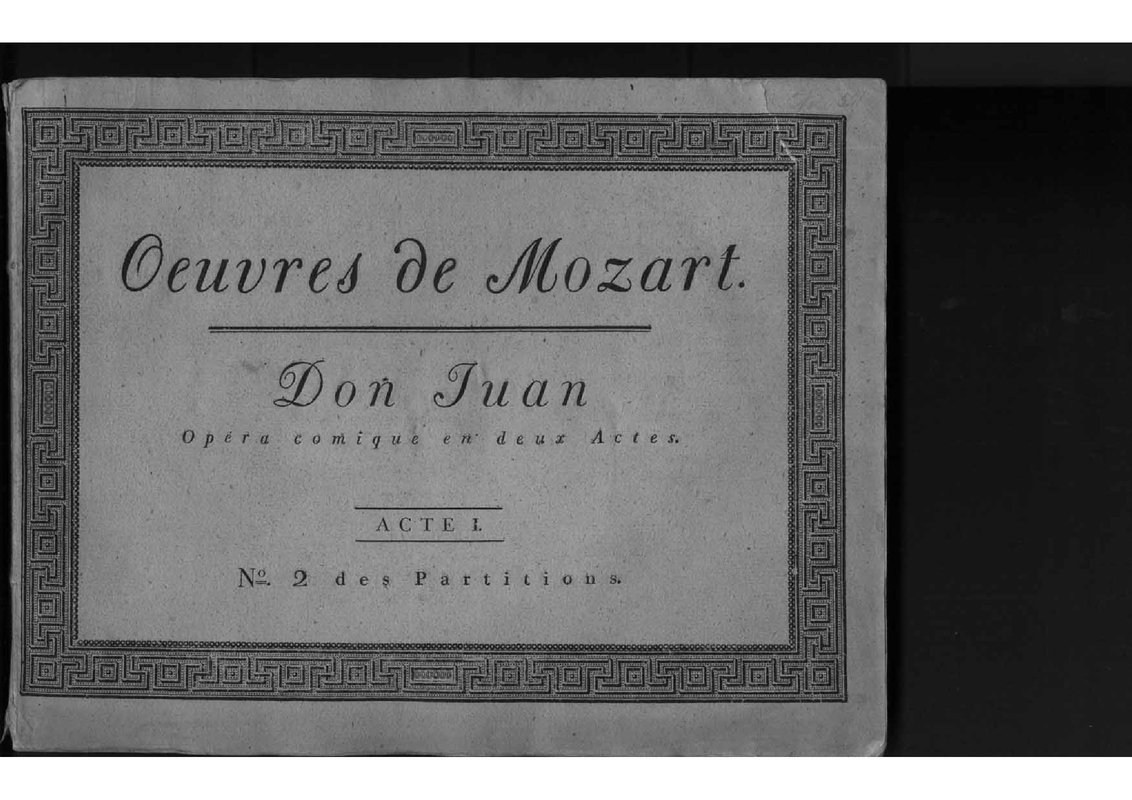 Read the complete score (opens in a new tab)
For lodge discussion
In the supper scene, follow Leporello as well as the Commendatore. One man trembles, one holds his ground, and the orchestra leaves room for both reactions. For a lodge discussion, ask who recognizes an obligation and who actually acts on it. The connection to this catalog runs through Mozart and the ethical questions of the drama.
Explore further
Wolfgang Amadeus Mozart and Freemasonry · Mozart’s Masonic Funeral Music