
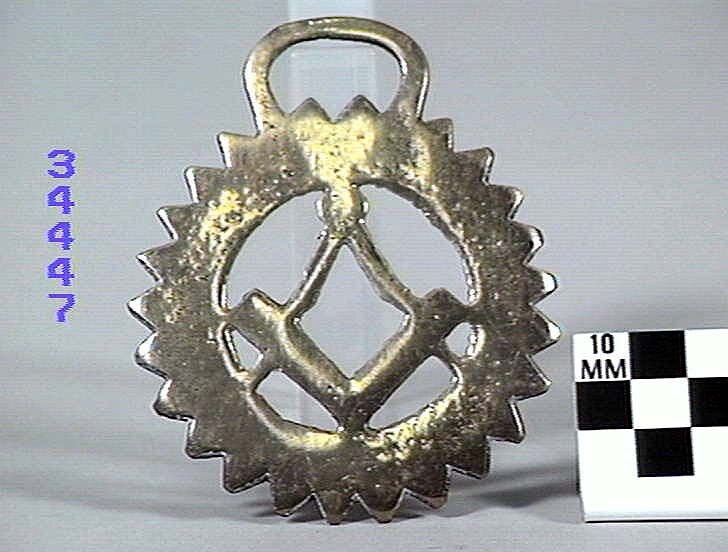
Image creditsCC BY 4.0 for Cast horse brass with square and compasses, England, 1825–1939 — Primary view
- Image
- Cast horse brass with square and compasses, England, 1825–1939 — Primary view
- Holding institution
- Museums Victoria
- Credit
- Museums Victoria
- Source
- View source record
- Image rights
- CC BY 4.0 · CC BY 4.0 license details
- Image changes
- JPEG-compressed for web display; no crop or retouch.
- Notices
- Copyright Museums Victoria / CC BY
Select the image to enlarge.
Cast horse brass with square and compasses, England, 1825–1939
Maker not recorded · 1825–1939
This cast brass horse ornament, made in England, carries the square and compasses within a serrated border, with a loop at the top for attaching to harness. Museums Victoria dates it broadly from 1825 to 1939, noting that cast horse brasses were first made in 1825 and that regular production ceased in the 1930s as motor vehicles replaced horse-drawn transport. Mr W. J. Haysom donated it in 1982. The museum’s catalog calls the emblem the “dividers and square.”
Held by Museums Victoria
Items in the American Freemasons Museum are held by the institutions credited on each entry.
Object details
- Object type
- Personal Objects & Accessories
- Maker
- Maker not recorded
- Date
- 1825–1939
- Medium
- Cast brass
- Dimensions
- Dimensions not recorded
- Held by
- Museums Victoria
- Institution catalog number
- ST 34447
- Collection credit
- Museums Victoria
- Museum ID
- AFM-0576
About this object
Museums Victoria catalogs the brass as ST 34447. The back has the remains of two studs, possibly from the casting process. The record classes it under agriculture and rural life, animal husbandry, and horses, and its keywords include amulets, folklore, heraldry, horse brasses, and symbols.
Its companion, a brass with a skull and crossbones from the same donor, is AFM-0577. Museums Victoria publishes the record under a CC BY 4.0 license. In the museum’s photograph, the square and compasses fill an open circle, and a pierced hanging loop rises above the serrated rim.
What we don’t know: who used it, and whether it marked a Mason’s horse or was simply decorative.
Sources
Source and image rights
Catalog source: Museums Victoria.
Reuse statements appear with each view, alongside supplied credits and source links. Consult the linked sources for more image information.
Cite this object
“Cast horse brass with square and compasses, England, 1825–1939.” Maker not recorded, 1825–1939. Museums Victoria, ST 34447. American Freemasons Museum, AFM-0576. https://americanfreemasons.org/museum/horse-brass-with-square-and-compasses-england/
Related objects
Objects that share a person, maker, place or type with this one.
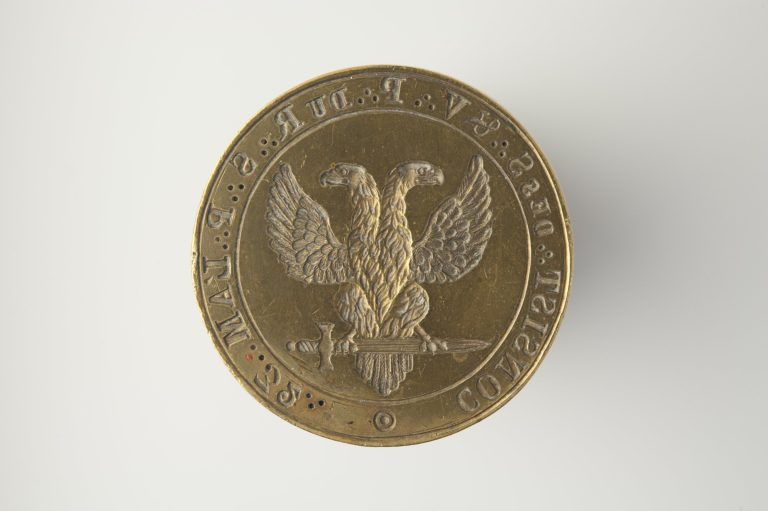
Image creditsCC0 for Brass seal of a Masonic consistory of the 32nd degree, nineteenth century — Primary view
- Image
- Brass seal of a Masonic consistory of the 32nd degree, nineteenth century — Primary view
- Holding institution
- Musée Carnavalet, Histoire de Paris
- Credit
- Paris Musées / Musée Carnavalet - Histoire de Paris
- Source
- View source record
- Image rights
- CC0 1.0 · CC0 license details
- Image changes
- Proportionally resized and JPEG-compressed for web display; no crop or retouch.
Brass seal of a Masonic consistory of the 32nd degree, nineteenth century
Date: 19th century
Held by Musée Carnavalet, Histoire de Paris
Explore object: Brass seal of a Masonic consistory of the 32nd degree, nineteenth century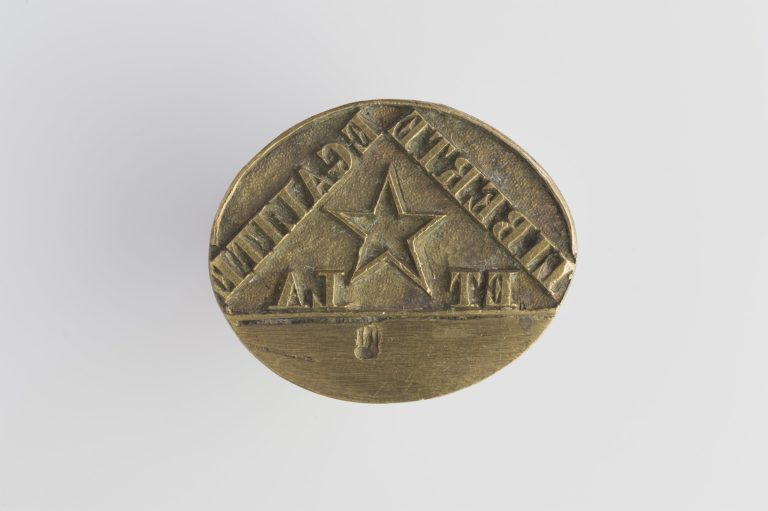
Image creditsCC0 for Brass seal with a star and “Égalité et la Liberté,” cut on the back of a heraldic eagle seal, nineteenth century — Primary view
- Image
- Brass seal with a star and “Égalité et la Liberté,” cut on the back of a heraldic eagle seal, nineteenth century — Primary view
- Holding institution
- Musée Carnavalet, Histoire de Paris
- Credit
- Paris Musées / Musée Carnavalet – Histoire de Paris
- Source
- View source record
- Image rights
- CC0 1.0 · CC0 license details
- Image changes
- Proportionally resized and JPEG-compressed for web display; no crop or retouching.
- Notices
- CC0 Paris Musées / Musée Carnavalet – Histoire de Paris
Brass seal with a star and “Égalité et la Liberté,” cut on the back of a heraldic eagle seal, nineteenth century
Date: 19th century
Held by Musée Carnavalet, Histoire de Paris
Explore object: Brass seal with a star and “Égalité et la Liberté,” cut on the back of a heraldic eagle seal, nineteenth century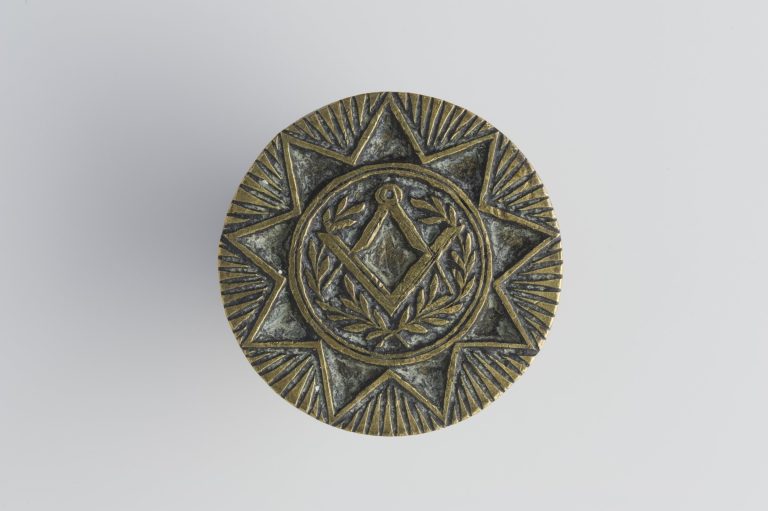
Image creditsCC0 for Brass seal with square and compasses in an eight-pointed star, possibly Masonic, nineteenth century — Primary view
- Image
- Brass seal with square and compasses in an eight-pointed star, possibly Masonic, nineteenth century — Primary view
- Holding institution
- Musée Carnavalet, Histoire de Paris
- Credit
- Paris Musées / Musée Carnavalet - Histoire de Paris
- Source
- View source record
- Image rights
- CC0 1.0 · CC0 license details
- Image changes
- Proportionally resized to 2400 × 1597 pixels and JPEG-compressed for web display; no crop or retouch.
Brass seal with square and compasses in an eight-pointed star, possibly Masonic, nineteenth century
Date: 19th century
Held by Musée Carnavalet, Histoire de Paris
Explore object: Brass seal with square and compasses in an eight-pointed star, possibly Masonic, nineteenth century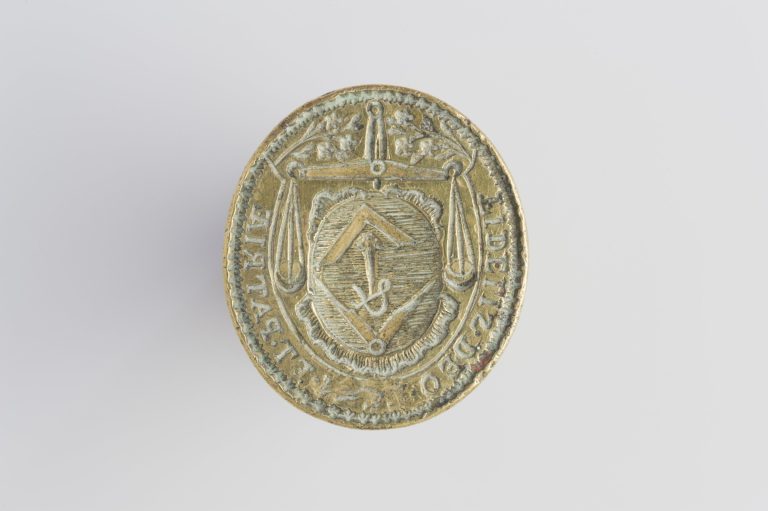
Image creditsCC0 for Brass seal with the legend “Fidelis Deo et Patriae,” possibly Masonic, late eighteenth century — Primary view
- Image
- Brass seal with the legend “Fidelis Deo et Patriae,” possibly Masonic, late eighteenth century — Primary view
- Holding institution
- Musée Carnavalet, Histoire de Paris
- Credit
- Paris Musées / Musée Carnavalet – Histoire de Paris
- Source
- View source record
- Image rights
- CC0 1.0 · CC0 license details
- Image changes
- Proportionally resized and JPEG-compressed for web display; no crop or retouching.
- Notices
- CC0 Paris Musées / Musée Carnavalet – Histoire de Paris
Brass seal with the legend “Fidelis Deo et Patriae,” possibly Masonic, late eighteenth century
Date: Late 18th century
Held by Musée Carnavalet, Histoire de Paris
Explore object: Brass seal with the legend “Fidelis Deo et Patriae,” possibly Masonic, late eighteenth century