
Read a historical title page, distinguish observation from interpretation, and write a source note another reader can verify.
Begin the first lesson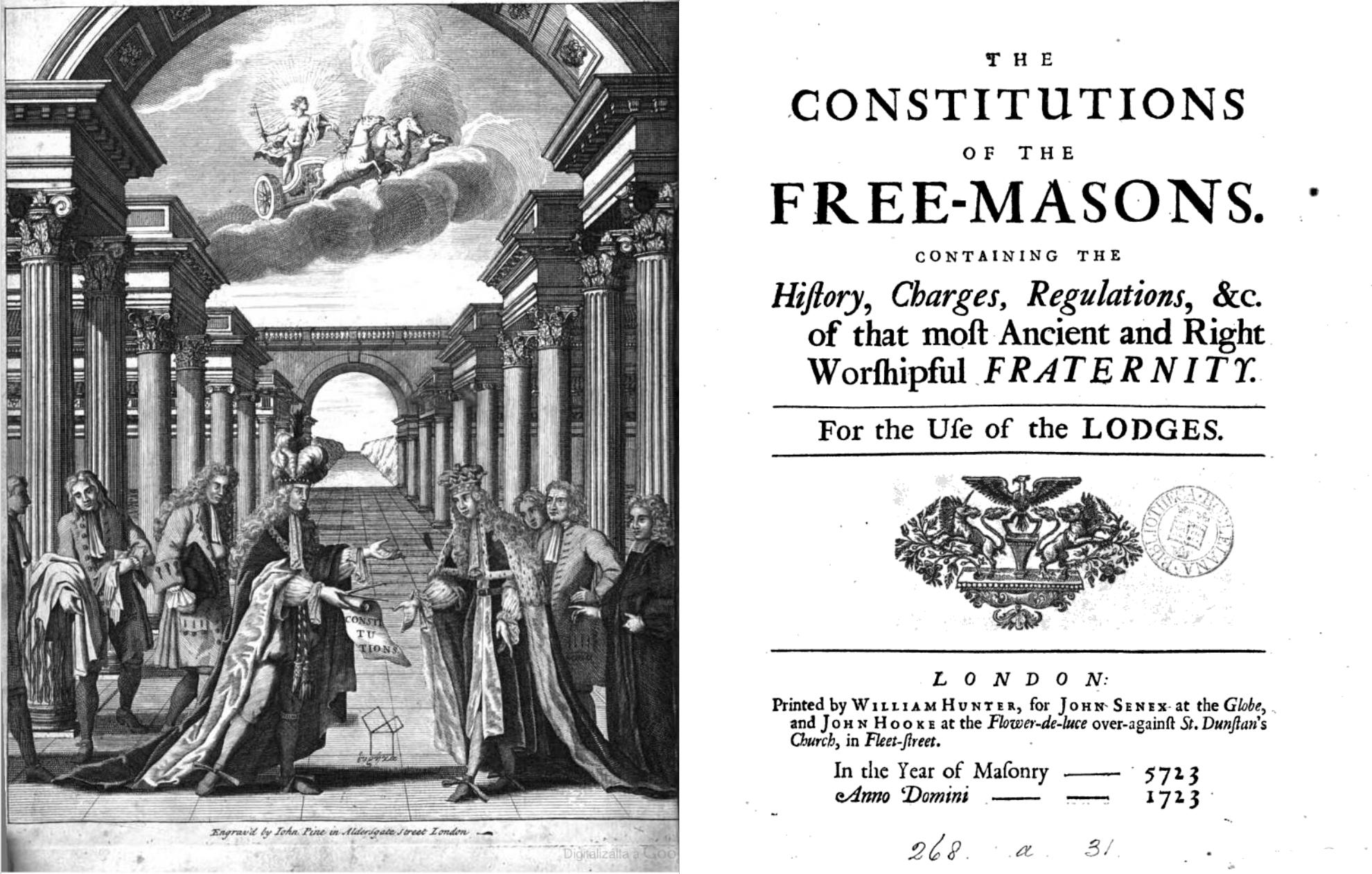
Lesson 1 of 4
Identify the edition
Open the linked American Freemasons Library entry and inspect the title page beside the engraved frontispiece. Transcribe the title as printed, then record the place and year. Keep the catalog title alongside your transcription so another reader can locate the item.
Try it. Find the wording on the page yourself. Write down its location and distinguish the original publication year from the date of a modern scan.
Check your work. Another reader can locate the same page and verify the words.
Lesson 2 of 4
Read one charge in context
Find the section of charges and the first charge concerning God and religion. Read the entire paragraph before selecting a phrase. Write one sentence describing what the text asks of its reader. Preserve the difference between a rule expressed on paper and a claim about what people actually did.
Try it. Choose a short phrase from the charge. Note the heading and printed page if visible, then paraphrase the surrounding passage.
Check your work. Your paraphrase keeps the subject, obligation, and scope recognizable to someone looking at the original.
Lesson 3 of 4
Question an interpretation
Make two columns on paper. In one, list what you can point to on the page. In the other, write what you think it means. Circle one inference that needs corroboration. Think about which evidence could answer it: minutes for a particular meeting, a later edition for a change in wording, or a historian’s account for context.
Try it. Write a modest claim and a stronger version. Underline the part of the stronger claim that this source alone cannot establish.
Check your work. You can explain precisely which words are evidence and which part remains your inference.
Lesson 4 of 4
Write and share a source note
In four sentences, identify the edition, name the passage, make one supported observation, and state one question for further study. Include a link and a page or section locator. For a current lodge question, use its current jurisdictional sources.
Try it. Give the note to a Brother and ask him to locate your evidence without coaching. Revise any ambiguous reference.
Check your work. A second reader finds the passage, can restate your claim, and sees where your evidence ends.
A short, verifiable source note
Use these prompts on paper or type below. Print or save a PDF before leaving to keep your notes. Practice checkmarks are remembered on this browser when local storage is available.