
Wolfgang Amadeus Mozart · 1791
What to listen for
Three widely spaced chords open the overture. Let each one fade before the next arrives. The quick music that follows asks for a different kind of attention: one group starts a tune and another enters on its heels.
About the work
Mozart and librettist Emanuel Schikaneder brought this German-language opera to the Viennese stage in 1791. Its trials and its concern with the qualities required of an initiate make it a natural companion to Mozart’s lodge music. The overture lets a lodge education group explore those ideas before hearing a word of the drama.
On a second hearing
Once the quick passage begins, choose one entrance and follow it until another instrument takes your attention. When the solemn chords return, do they interrupt the action or give it direction?
Listen to the overture
From the overture to the trials
On 30 September 1791, a Viennese audience at the Theater auf der Wieden heard a fairy tale in which a prince sets out to rescue a woman and gradually discovers how little he knows about her captors. Emanuel Schikaneder wrote the words and played Papageno, the bird catcher. The work is a Singspiel. Spoken dialogue carries the action between musical numbers, so the move from speech into song is itself worth hearing.
Compare two moments in Act II. In “Der Hölle Rache,” the Queen of the Night presses her daughter Pamina toward revenge. Listen to how the repeated high notes sharpen each demand. Later, at the trials of fire and water, Pamina takes Tamino’s hand and the flute accompanies their passage. The Queen commands one voice. In the trials, listen for the sound of two people moving together.
What makes the opera relevant to Freemasonry?
Tamino seeks admission to a community whose members judge his conduct. Silence, perseverance and the passage through trials offer listeners concrete points of comparison with initiation. Papageno wants companionship and a good meal, and his presence keeps a second idea of a worthwhile life onstage. For a lodge discussion, consider what Pamina contributes to the final trial that Tamino could never have supplied alone.
Read the score
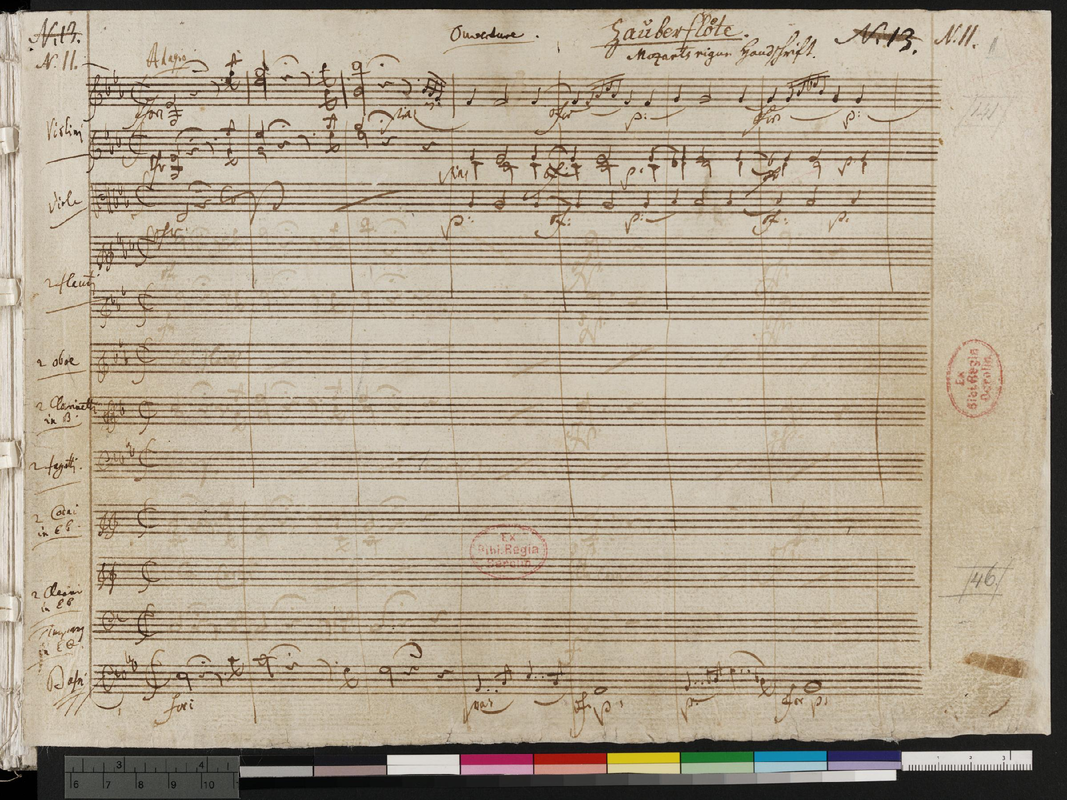 Read the complete score (opens in a new tab)
The Library of Congress viewer lets you turn the pages of Mozart’s handwritten manuscript and enlarge individual passages.
Sources for this guide
International Mozarteum Foundation · Köchel catalog entry for K. 620
Explore further
Wolfgang Amadeus Mozart and Freemasonry · Mozart’s Masonic Funeral Music