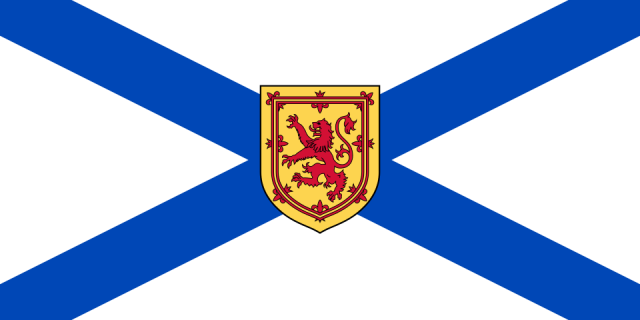
The Grand Lodge of Nova Scotia is recognized by the United Grand Lodge of England.
The Grand Lodge of Nova Scotia A.F. & A.M. was constituted on February 20, 1866, at Halifax, making it the oldest grand lodge in Atlantic Canada. The founding in 1866 came just one year before New Brunswick's (1867) and both predated all other Canadian provincial grand lodges. The earliest lodge at Annapolis Royal operated under authority from Henry Price, the Provincial Grand Master of Masons for New England and North America who also authorized the first lodge in what would become Ontario, a connection that tied Nova Scotia Masonry to the same institutional roots as the American colonial tradition.
Halifax, as the provincial capital and the dominant city of Atlantic Canada, has been the center of Nova Scotia Masonic life from the earliest period. The city's role as a major Royal Navy base through the eighteenth and nineteenth centuries gave it a continuous military lodge culture that supplemented the civilian fraternal tradition. The naval officers, merchants, and lawyers of Georgian Halifax formed the core of the early lodge membership, and the tradition they established has persisted through the full arc of Nova Scotia's history.
Alexander Keith, who served as Grand Master of the District Grand Lodge of Nova Scotia before the provincial grand lodge was constituted, was the most prominent Masonic figure in the province's pre-Confederation era. His career as mayor, politician, and brewer made him one of Halifax's most visible public figures, and his Masonic prominence gave the fraternity a public face that was inseparable from the city's civic life.
Cape Breton, which joined Nova Scotia in 1820, has its own distinct Masonic heritage rooted in the industrial coal and steel economy of the Sydney area and in the Scottish immigrant communities that settled the island. The Cape Breton lodges reflect a different strand of Nova Scotia Masonry, more working-class and more Scottish in cultural heritage than the Halifax mainstream.
The Grand Lodge of Nova Scotia is headquartered in Halifax and today serves lodges across the province, from Cape Breton to the Annapolis Valley and the South Shore. Nova Scotia's Masonic tradition (from the 1738 Annapolis Royal lodge through the colonial military period, Confederation, the industrial age, and the contemporary Atlantic Canadian economy) represents the oldest continuous Masonic heritage in Canada. The grand lodge serves a province whose population has remained relatively stable over the past century, and whose lodge communities reflect the continuity of communities that have changed less dramatically than the faster-growing provinces of central and western Canada.
Organization details
- Established
- Founded 1866
- Public Grand Lodge office
- 167 Coronation Avenue, Halifax, NS, B3N 2N2, Canada
- UGLE listing
- Listed as recognised by the United Grand Lodge of England
UGLE listing checked November 18, 2026. This check is not the original recognition date or a statement of every jurisdiction’s visitation rules.
Sources for these organization details