
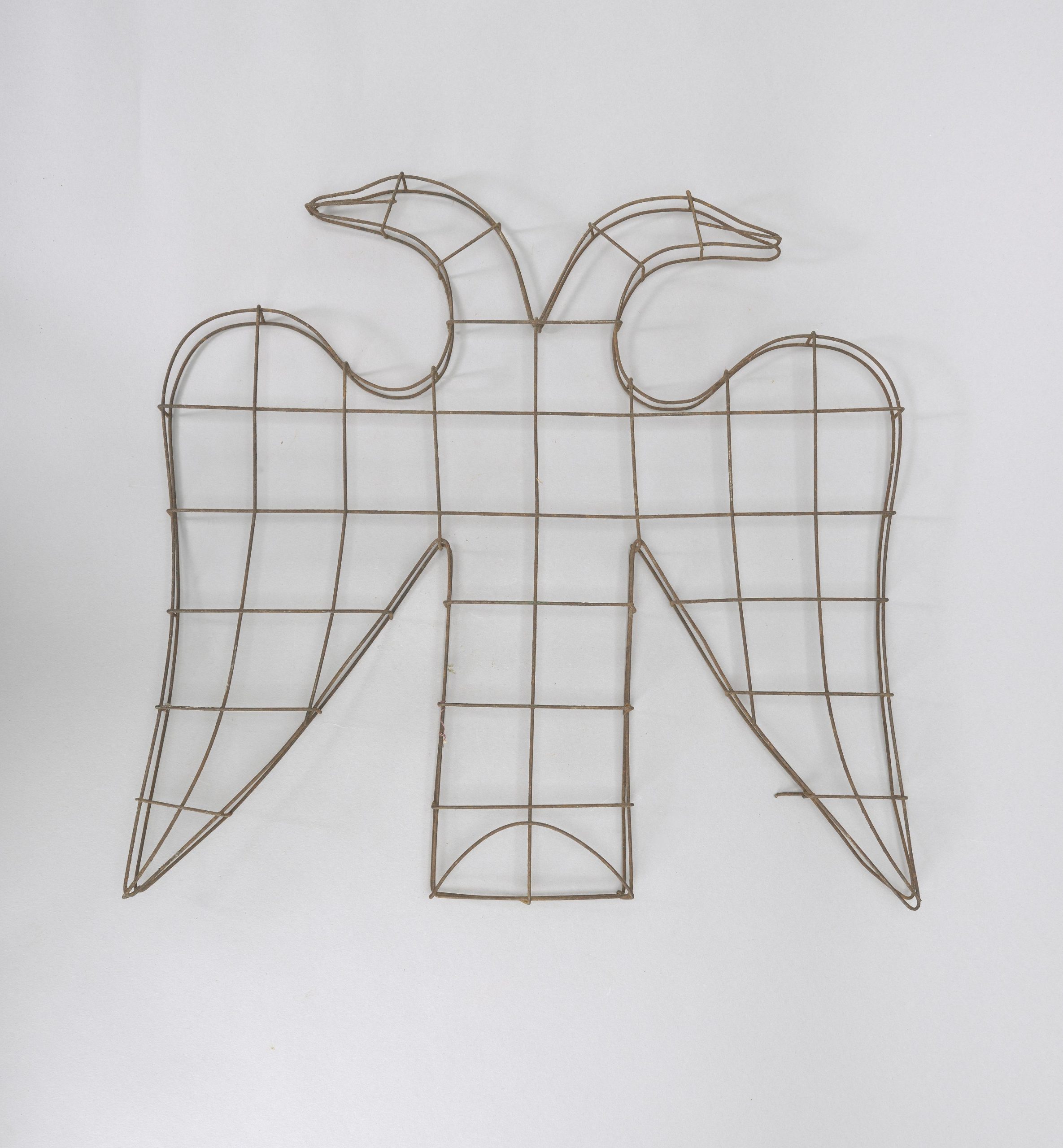
Image creditsCC0 for Wire florist’s frame in the shape of the Scottish Rite double-headed eagle, about 1860–1940 — Primary view
- Image
- Wire florist’s frame in the shape of the Scottish Rite double-headed eagle, about 1860–1940 — Primary view
- Holding institution
- Smithsonian Gardens, Horticultural Artifacts Collection
- Credit
- Smithsonian Gardens, Horticultural Artifacts Collection. Donated in memory of Harald Sletwold.
- Source
- View source record
- Image rights
- CC0 · CC0 license details
Select the image to enlarge.
Wire florist’s frame in the shape of the Scottish Rite double-headed eagle, about 1860–1940
ca. 1860–1940
This wire frame, shaped like the double-headed eagle that is the emblem of the Scottish Rite, was made to be filled with flowers for a floral tribute. Smithsonian Gardens dates it to about 1860 to 1940. The open frame outlines two heads facing outward, spread wings, and a tail, with a grid of wires across the body to hold the flowers. It measures about 51 by 48 centimeters and is about 2.5 centimeters deep.
Held by Smithsonian Gardens, Horticultural Artifacts Collection
Items in the American Freemasons Museum are held by the institutions credited on each entry.
Object details
- Object type
- Ceremonial Implements
- Date
- ca. 1860–1940
- Medium
- Wire
- Dimensions
- 20 × 19 × 1 in. (50.8 × 48.3 × 2.5 cm)
- Held by
- Smithsonian Gardens, Horticultural Artifacts Collection
- Institution catalog number
- 1980.036.003
- Collection credit
- Smithsonian Gardens, Horticultural Artifacts Collection. Donated in memory of Harald Sletwold.
- Museum ID
- AFM-0202
About this object
Smithsonian Gardens catalogs the frame as “Wire frame, Scottish Rite, double eagle,” of wire, measuring 20 by 19 by 1 inches, accession number 1980.036.003, donated in memory of Harald Sletwold. According to Smithsonian Gardens, social and business organizations commonly sent flowers to the funerals of members in the late 19th and early 20th centuries, and the tributes were often set pieces shaped like the organization’s emblem, made in the organization’s colors. Frames had to be accurate so the emblem stayed recognizable, and the museum notes that emblem pieces were also used at ceremonies and special events. The museum describes the Scottish Rite as the branch of Freemasonry offering further degrees to Master Masons, with the two-headed eagle as its emblem.
Other Masonic florist’s frames in this collection include a Knights Templar cross (AFM-0517) and several squares and compasses (AFM-0523 through AFM-0525).
What we don’t know: the florist or firm that used it.
Sources
Source and image rights
Catalog source: Smithsonian Gardens, Horticultural Artifacts Collection.
Reuse statements appear with each view, alongside supplied credits and source links. Consult the linked sources for more image information.
Cite this object
“Wire florist’s frame in the shape of the Scottish Rite double-headed eagle, about 1860–1940.” ca. 1860–1940. Smithsonian Gardens, Horticultural Artifacts Collection, 1980.036.003. American Freemasons Museum, AFM-0202. https://americanfreemasons.org/museum/wire-frame-scottish-rite-double-eagle/
Related objects
Objects that share a person, maker, place or type with this one.
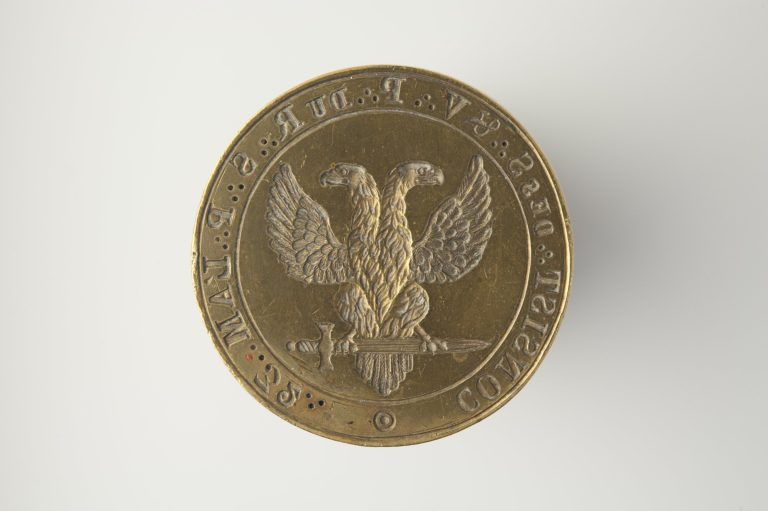
Image creditsCC0 for Brass seal of a Masonic consistory of the 32nd degree, nineteenth century — Primary view
- Image
- Brass seal of a Masonic consistory of the 32nd degree, nineteenth century — Primary view
- Holding institution
- Musée Carnavalet, Histoire de Paris
- Credit
- Paris Musées / Musée Carnavalet - Histoire de Paris
- Source
- View source record
- Image rights
- CC0 1.0 · CC0 license details
- Image changes
- Proportionally resized and JPEG-compressed for web display; no crop or retouch.
Brass seal of a Masonic consistory of the 32nd degree, nineteenth century
Date: 19th century
Held by Musée Carnavalet, Histoire de Paris
Explore object: Brass seal of a Masonic consistory of the 32nd degree, nineteenth century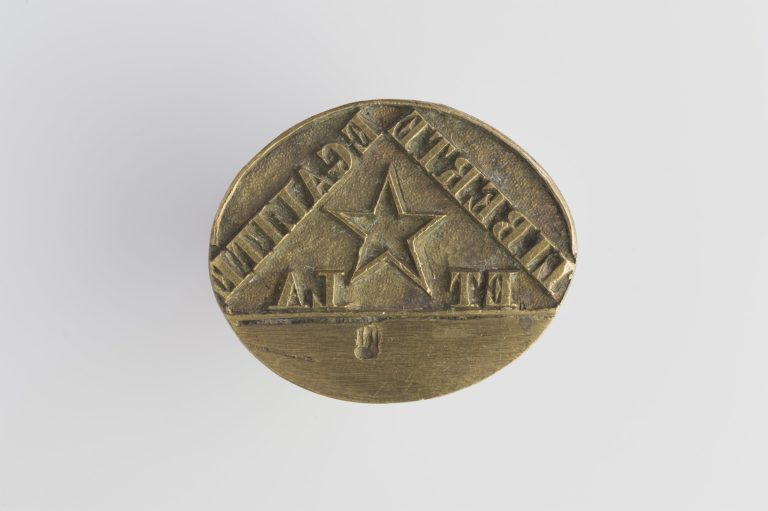
Image creditsCC0 for Brass seal with a star and “Égalité et la Liberté,” cut on the back of a heraldic eagle seal, nineteenth century — Primary view
- Image
- Brass seal with a star and “Égalité et la Liberté,” cut on the back of a heraldic eagle seal, nineteenth century — Primary view
- Holding institution
- Musée Carnavalet, Histoire de Paris
- Credit
- Paris Musées / Musée Carnavalet – Histoire de Paris
- Source
- View source record
- Image rights
- CC0 1.0 · CC0 license details
- Image changes
- Proportionally resized and JPEG-compressed for web display; no crop or retouching.
- Notices
- CC0 Paris Musées / Musée Carnavalet – Histoire de Paris
Brass seal with a star and “Égalité et la Liberté,” cut on the back of a heraldic eagle seal, nineteenth century
Date: 19th century
Held by Musée Carnavalet, Histoire de Paris
Explore object: Brass seal with a star and “Égalité et la Liberté,” cut on the back of a heraldic eagle seal, nineteenth century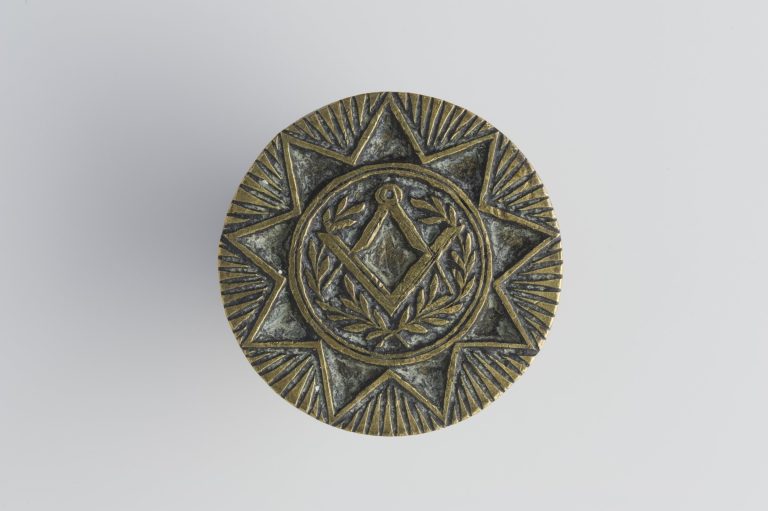
Image creditsCC0 for Brass seal with square and compasses in an eight-pointed star, possibly Masonic, nineteenth century — Primary view
- Image
- Brass seal with square and compasses in an eight-pointed star, possibly Masonic, nineteenth century — Primary view
- Holding institution
- Musée Carnavalet, Histoire de Paris
- Credit
- Paris Musées / Musée Carnavalet - Histoire de Paris
- Source
- View source record
- Image rights
- CC0 1.0 · CC0 license details
- Image changes
- Proportionally resized to 2400 × 1597 pixels and JPEG-compressed for web display; no crop or retouch.
Brass seal with square and compasses in an eight-pointed star, possibly Masonic, nineteenth century
Date: 19th century
Held by Musée Carnavalet, Histoire de Paris
Explore object: Brass seal with square and compasses in an eight-pointed star, possibly Masonic, nineteenth century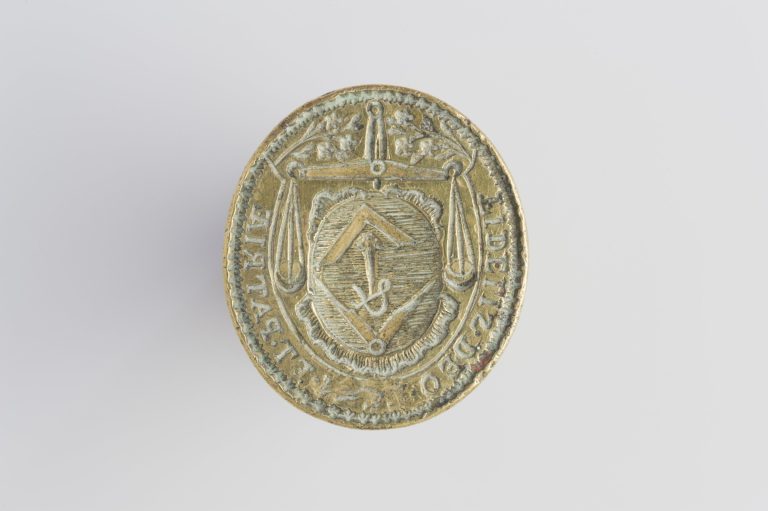
Image creditsCC0 for Brass seal with the legend “Fidelis Deo et Patriae,” possibly Masonic, late eighteenth century — Primary view
- Image
- Brass seal with the legend “Fidelis Deo et Patriae,” possibly Masonic, late eighteenth century — Primary view
- Holding institution
- Musée Carnavalet, Histoire de Paris
- Credit
- Paris Musées / Musée Carnavalet – Histoire de Paris
- Source
- View source record
- Image rights
- CC0 1.0 · CC0 license details
- Image changes
- Proportionally resized and JPEG-compressed for web display; no crop or retouching.
- Notices
- CC0 Paris Musées / Musée Carnavalet – Histoire de Paris
Brass seal with the legend “Fidelis Deo et Patriae,” possibly Masonic, late eighteenth century
Date: Late 18th century
Held by Musée Carnavalet, Histoire de Paris
Explore object: Brass seal with the legend “Fidelis Deo et Patriae,” possibly Masonic, late eighteenth century