
Skip to content
American
Freemasons

Menu

United States State lodge directory

Freemasonry in Maine

In 1820, the Grand Lodge of Maine was organized.

153 community guides169 published lodges
All Maine lodge listings

Lodges by community

Open a city guide for the published lodge profiles. For wider coverage, use the grand lodge resources below.

153 communities

Official lodge resources

Freemasonry in Maine

At a glance

Governing body
Grand Lodge of Maine
Jurisdiction
Maine
Standing of Grand Lodge of Maine
Listed by UGLE
Prince Hall Affiliated body
Most Worshipful Prince Hall Grand Lodge, Jurisdiction of Massachusetts

Maine and its grand lodge came into existence together. Until 1820, Maine was part of Massachusetts, and its Masons held charters from the Grand Lodge of Massachusetts, the oldest grand lodge in the United States. The same political process that separated Maine from Massachusetts, the Missouri Compromise of 1820, created both the twenty-third state and the conditions for an independent Masonic jurisdiction. The first lodge in Maine had been chartered in Portland in 1762, sixty years before independence, and by 1820 there were thirty-one lodges in the region. William King (who organized and led the campaign for Maine statehood, who was chosen president of the convention that wrote Maine's constitution, and who was elected the state's first governor) was also a Freemason, and was elected the first Grand Master of Masons in Maine in the same year he became governor. The coincidence was not unusual for the era: on the early American frontier and in young American states, the same men built the political and the Masonic institutions simultaneously.

Maine's geography shaped its Masonic development in ways that differed from the rest of New England. A vast state with a long coastline, extensive interior forests, and a dispersed population in small coastal, river, and mill towns, Maine's lodge network spread across communities that often had little else by way of formal civic structure. The maritime economy of the coast, the logging and lumber industry of the interior, and the textile mills of the Androscoggin and Kennebec valleys each produced their own lodge cultures.

The Anti-Masonic movement of the late 1820s and 1830s touched Maine as it touched all of New England, suppressing lodge activity for several years. The recovery that followed was thorough, and by 1870 there were 154 lodges in the state, impressive figures for a state of Maine's modest population.

Maine has no UGLE-recognized Prince Hall grand lodge. The state is among those where formal mainstream-PHA recognition has not been established.

Maine · Key dates

1820

The Grand Lodge of Maine was organized.

1820

Founded

UGLE Recognized

Recognition

Yes

PHA Grand Lodge

Both Constitutions Came from Massachusetts

The Grand Lodge of Maine separated from Massachusetts in 1820, the year Maine became a state. Prince Hall Masonry in Maine never separated: the lodge at Bangor still holds under the Prince Hall Grand Lodge of Massachusetts, the oldest Prince Hall grand lodge in the world.

BangorPortland 1820Grand Lodge of Maine, statewidePrince Hall lodge under MassachusettsWhere the Grand Lodge of Maine was formed

Mainstream

Grand Lodge of Maine, A.F. & A.M.

Formed at Portland in 1820, when Maine separated from Massachusetts and became a state, out of lodges that had held under the Grand Lodge of Massachusetts.

Recognized by the United Grand Lodge of England.

Prince Hall Affiliated

Prince Hall Grand Lodge of Massachusetts

No Prince Hall grand lodge is seated in Maine, but Prince Hall Masonry works here. The Prince Hall Grand Lodge of Massachusetts holds a lodge at Bangor, alongside others at Portsmouth in New Hampshire, in Trinidad and Tobago, in Spain and in the Netherlands.

That grand lodge is the direct successor of African Lodge No. 459, chartered by the Grand Lodge of England on September 29, 1784. It is recognized by the United Grand Lodge of England.

The two constitutions in Maine have the same parent. Maine’s mainstream lodges held under Massachusetts until statehood in 1820 and then formed their own grand lodge; its Prince Hall lodge never made that separation and remains under Massachusetts today. A state without a Prince Hall grand lodge of its own is not a state without Prince Hall Masonry.

The Massachusetts body is where all of Prince Hall Freemasonry begins. Prince Hall petitioned the Grand Lodge of England in March 1784 and the charter was granted that September; Captain Scott, a brother-in-law of John Hancock, delivered the warrant to him in person on April 29, 1787. Prince Hall died on December 4, 1807 and is buried at Copp’s Hill in Boston. The African Grand Lodge formed in December 1808 took his name in 1847.

Explore the Maine Masonic collections, including By a Steady Light, an illustrated series featuring a lighthouse beam and a mason’s plumb line.

Recognition status: United Grand Lodge of England, Foreign Grand Lodges, which lists the Grand Lodge of Maine and the Prince Hall Grand Lodge of Massachusetts, and lists no Prince Hall grand lodge seated in Maine. The lodge at Bangor and the other lodges of the Massachusetts jurisdiction: Most Worshipful Prince Hall Grand Lodge, Jurisdiction of Massachusetts, in the address of its Grand Master. The charter of African Lodge No. 459 on September 29, 1784, its delivery on April 29, 1787, Prince Hall’s death and burial, the formation of the African Grand Lodge in December 1808 and the renaming of 1847: the same grand lodge and Prince Hall grand lodge histories. Consulted August 11, 2026. We have not established whether the Grand Lodge of Maine recognizes the Prince Hall Grand Lodge of Massachusetts, and no recognition is asserted here. The address of the Grand Lodge of Maine is not stated because we have not confirmed it. State outline simplified from Natural Earth public domain boundary data.

Grand Lodge of Maine

The Grand Lodge of Maine is recognized by the United Grand Lodge of England.

The Grand Lodge of Maine was organized in 1820, concurrent with Maine's admission to the Union, with William King (simultaneously the state's first governor) elected as its first Grand Master. Simon Greenleaf, known in Maine Masonic history as "the Father of Maine Masonry" for his tireless efforts to organize the grand lodge, went on to become one of the most distinguished legal scholars in American history. Greenleaf served as a professor at Harvard Law School from 1833 to 1848 and produced the Treatise on the Law of Evidence, a foundational work on American evidentiary law that was so authoritative it was cited in courts throughout the English-speaking world. His Masonic career, beginning in Maine, preceded and ran parallel to his legal scholarship.

Maine's grand lodge grew steadily through the nineteenth century, benefiting from the state's well-developed maritime and timber economy and the strong civic culture of its coastal and river towns. By 1870 there were 154 lodges in Maine and more than 14,000 members, impressive figures for a state of Maine's modest population and reflecting the fraternity's deep integration into Maine's professional and artisan classes.

The maritime character of Maine's economy gave its lodge culture a distinctive flavor. Lodges in Portland, Rockland, Thomaston, Bath, and the other coastal communities served men whose working lives centered on shipbuilding, fishing, granite quarrying, and the coastal trade. Bath, as one of the premier shipbuilding cities in nineteenth-century America, had particularly active Masonic lodges connected to the shipyard communities. Portland, as the state's commercial center and the largest city, was the natural hub of Maine Masonry from the founding period through the present.

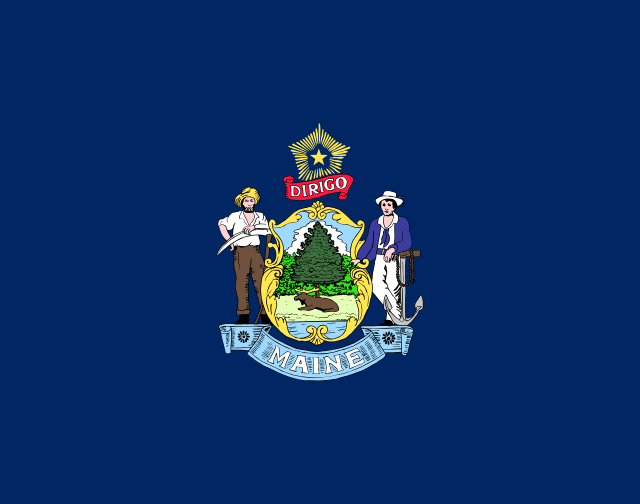
The Grand Lodge of Maine is headquartered in Auburn and serves lodges across a geographically large and sparsely populated state. Maine's motto (Dirigo, "I lead") is embraced by its Masonic community as a statement of purpose. The state has no UGLE-recognized Prince Hall grand lodge; Maine is among the states where formal PHA recognition has not been established.

Maine's twentieth-century Masonic trajectory followed the national pattern. Membership grew through the first half of the century and peaked in the postwar years before declining alongside broader changes in American fraternal participation. The state's relatively small and aging population has contributed to lodge consolidations, but the fraternal tradition remains continuous from the 1762 Portland charter through the present. Maine's distinctive character (its coastal identity, its independence, its "Vacationland" economy) has shaped a lodge culture that is compact, rooted in specific communities, and connected to the state's long relationship with the sea and the land.

Organization details

Established
Formed June 1820
General telephone
(207) 843-1086
General email
[email protected]
Official contact
Official contact page
UGLE listing
Listed as recognised by the United Grand Lodge of England

Unverified office or general contact fields are omitted. Use the official contact route above. A local lodge address is not a Grand Lodge office.

UGLE listing checked November 18, 2026. This check is not the original recognition date or a statement of every jurisdiction’s visitation rules.

Sources for these organization details

Most Worshipful Prince Hall Grand Lodge, Jurisdiction of Massachusetts

No Prince Hall grand lodge is seated in Maine, but Prince Hall Masonry works in the state. A Prince Hall lodge meets at Bangor under the Most Worshipful Prince Hall Grand Lodge, Jurisdiction of Massachusetts, which also holds lodges at Portsmouth in New Hampshire, in the Republic of Trinidad and Tobago, at Rota in Spain and at Amersfoort in the Netherlands.

This page makes that distinction deliberately, because a state with no Prince Hall grand lodge of its own is not a state without Prince Hall Masonry, and the two are easily confused.

There is a symmetry in Maine that is worth noticing. Maine's mainstream lodges held under the Grand Lodge of Massachusetts until 1820, when Maine separated from Massachusetts and became a state, and they then formed the Grand Lodge of Maine. The Prince Hall lodge at Bangor never made that separation. Both Masonic traditions in Maine came from Massachusetts; one became independent at statehood and the other did not.

The body it holds under is the oldest in Prince Hall Freemasonry and the origin of all of it. Prince Hall petitioned the Grand Lodge of England for a warrant in March 1784, and the charter for African Lodge No. 459 was granted on September 29 of that year. Captain Scott, a brother-in-law of John Hancock, delivered it to Prince Hall in person on April 29, 1787. Prince Hall died on December 4, 1807 and is buried at Copp's Hill in Boston. The following December the African Grand Lodge was organized, and in 1847 it took his name. Every Prince Hall grand lodge in the United States traces its descent from that lodge, and the Grand Lodge of England has since treated African Lodge No. 459 as a legitimate origin for grand lodges seeking recognition.

One thing this page does not state is whether the Grand Lodge of Maine recognizes the Prince Hall Grand Lodge of Massachusetts. We have not established it from either body and will not assume it. Both are recognized by the United Grand Lodge of England, but that is a separate question from whether the two grand lodges working in Maine stand in amity with one another.

For a visitor, enquiries about Prince Hall Masonry in Maine go to the Massachusetts grand lodge rather than to a Maine address, and the standing of any visit should be confirmed with your own grand lodge beforehand.

Visiting Maine as a Masonic Traveler

Portland Lodge No. 1 traces its history to the 1762 charter, making it one of the oldest lodges in New England and among the oldest continuously active Masonic lodges in the United States. Portland's historic Old Port district, with its well-preserved nineteenth-century commercial architecture and its working waterfront, provides the maritime context that has always defined Masonic life in Maine's largest city.

Bath, on the Kennebec River, was one of the preeminent shipbuilding cities in nineteenth-century America and produced some of the largest wooden sailing ships ever built in the United States. The Maine Maritime Museum in Bath documents the shipbuilding heritage in which Bath's active Masonic lodges were embedded. The city's Victorian-era architecture reflects the prosperity generated by the shipyards.

Thomaston, on the mid-coast, is home to lodges with histories stretching to the early national period. The mid-coast communities between Portland and Bar Harbor (Rockland, Camden, Searsport, and Castine) each have active lodge communities with maritime histories. Searsport in particular, known as the "Town of Sea Captains," has a Masonic heritage rooted in the deep-sea shipping trade that made it prosperous through the late nineteenth century.

The Grand Lodge of Maine archives in Auburn preserve records from the 1820 founding and from the lodges chartered by Massachusetts before Maine's independence. Visiting Masons should contact the Grand Lodge of Maine at mainemason.org for current lodge directories.

Find a lodge in Maine

Browse all 169 local listings

Appendant Masonic Bodies in Maine

Shriners International is active in Maine through the Kora Shrine in Lewiston, which serves Masons across the state and supports the Shriners Children's hospital network. Maine's Shrine community reflects the broader New England Masonic culture: compact by the standards of larger states, but institutionally continuous and rooted in the state's long fraternal tradition.

The Northern Masonic Jurisdiction of the Scottish Rite maintains active bodies in Portland and Bangor, Maine's two largest cities, operating under the Supreme Council headquartered in Lexington, Massachusetts.

York Rite bodies (Chapters of Royal Arch Masons, Councils of Cryptic Masons, and Commanderies of Knights Templar) operate across Maine, with several bodies whose continuous histories stretch to the early nineteenth century. Maine's founding as a state in 1820 coincided with an era of rapid York Rite development across New England, and several of the state's Chapters and Commanderies were established in that same period.

The Order of the Eastern Star, DeMolay International, and Job's Daughters International operate in Maine, extending Masonic fellowship to family members throughout the state's lodge communities.

Explore More

The Grand Lodge of Maine, formed at Portland in 1820 when Maine separated from Massachusetts, is recognized by the United Grand Lodge of England and is the only grand lodge seated in Maine.

No Prince Hall grand lodge is seated in the state. A Prince Hall lodge works at Bangor under the Most Worshipful Prince Hall Grand Lodge, Jurisdiction of Massachusetts, which England also recognizes and which is the direct successor of African Lodge No. 459, chartered in 1784.

Whether the Grand Lodge of Maine recognizes the Prince Hall Grand Lodge of Massachusetts is not something we have established, and this page makes no claim either way.

A visitor should direct enquiries about Prince Hall Masonry in Maine to the Massachusetts grand lodge, and should confirm the current position with his own grand lodge before arranging a visit.

Sources & References

United Grand Lodge of England, Foreign Grand Lodges (https://www.ugle.org.uk/about-us/foreign-grand-lodges). Recognition status of the Grand Lodge of Maine.

Grand Lodge of Maine, A.F. & A.M. (https://www.mainemason.org/). Official site; founding history, lodge directory, Simon Greenleaf biographical materials.

Maine Maritime Museum (https://www.mainemaritimemuseum.org/). Bath, Maine; context for the shipbuilding economy in which Maine’s coastal lodge culture developed.

Conference of Grand Masters of Masons in North America / COGMNA (https://www.cogmna.info/). Inter-jurisdictional recognition and amity lists.

Skip to content