
Skip to content
American
Freemasons

Menu

United States State lodge directory

Freemasonry in South Carolina

In 1787, the Ancient Grand Lodge of South Carolina was instituted, one predecessor of today’s grand lodge.

247 community guides525 published lodges
All South Carolina lodge listings

Lodges by community

Open a city guide for the published lodge profiles. For wider coverage, use the grand lodge resources below.

247 communities

Official lodge resources

Freemasonry in South Carolina

At a glance

Governing body
Grand Lodge of South Carolina
Jurisdiction
South Carolina
Standing of Grand Lodge of South Carolina
Listed by UGLE
Prince Hall Affiliated body
Most Worshipful Prince Hall Grand Lodge of Free and Accepted Masons of the State of South Carolina

South Carolina has some of the deepest colonial Masonic roots in America. The Provincial Grand Lodge of South Carolina was instituted in 1736, just three years after the Massachusetts Provincial Grand Lodge, making it one of the oldest continuous Masonic jurisdictions in the Western Hemisphere. Charleston, then one of the wealthiest and most cosmopolitan cities in the colonies, became an early center of American Masonic life, and Solomon's Lodge of Charleston (chartered 1735) is among the oldest lodges on the continent.

The history of independent grand lodge formation in South Carolina is uniquely complex. After the Revolution, two rival grand lodges operated in parallel: an Ancient York Masons grand lodge instituted in March 1787, and a "Modern" grand lodge descending from the 1736 Provincial Grand Lodge. Both were incorporated by the state in 1791. They did not unite until the nineteenth century, creating one of the most documented cases of dual grand lodges in American history.

When George Washington toured the South in 1791, he was received by the Ancient Grand Lodge at Charleston, an exchange of addresses preserved in the Washington papers and one of the most cited documents in South Carolina Masonic history.

South Carolina holds a singular place in the history of the Scottish Rite. The Supreme Council of the Ancient and Accepted Scottish Rite, Southern Jurisdiction (now the largest Masonic appendant body in the world) was founded in Charleston on May 31, 1801. The original document of the Supreme Council's formation, signed in Charleston, is the founding charter of Scottish Rite Freemasonry in the United States. Charleston's role as the birthplace of the Scottish Rite, SJ, gives South Carolina a claim to historical significance in American Masonry that extends far beyond its own grand lodge.

One recognized mainstream grand lodge operates in South Carolina today. The Grand Lodge of South Carolina is recognized by UGLE. South Carolina has no UGLE-recognized Prince Hall grand lodge. Prince Hall Masonry has a presence in South Carolina, but no Prince Hall grand lodge in the state currently appears on UGLE's published recognition list.

South Carolina · Key dates

1787

The Ancient Grand Lodge of South Carolina was instituted, one predecessor of today’s grand lodge.

1868

A Prince Hall grand lodge was organized in South Carolina.

1737

Founded

UGLE Recognized

Recognition

Yes

PHA Grand Lodge

Two Grand Lodges, No Recognition

South Carolina has two grand lodges and they have never recognized each other. Since the Grand Lodge of Mississippi voted against recognition in February 2026, these two states are the last in the country where no recognition of any kind exists.

ColumbiaCharlestonPrince Hall Grand Lodge, seated at ColumbiaCharleston, where both traditions began

Mainstream

Grand Lodge of South Carolina, A.F.M.

Formed in 1787 and recognized by the United Grand Lodge of England. Freemasonry in the state is older still: Solomon’s Lodge No. 1 at Charleston was organized in 1734 and received its warrant from the Grand Lodge at London in 1735.

It has not recognized the Prince Hall grand lodge of the state.

Prince Hall Affiliated

Most Worshipful Prince Hall Grand Lodge of South Carolina

Founded in 1868, when lodges at Charleston and elsewhere petitioned to form a grand lodge. It declared itself a sovereign jurisdiction in 1872 under Grand Master George E. Johnston.

Seated at 2324 Gervais Street, Columbia. It is not on the recognition list of the United Grand Lodge of England, which follows the mainstream grand lodge of each state.

The grand lodge traces its earliest roots to a military lodge. Its own history records that one of the first known lodges of Black Masons in South Carolina was said to have been established by soldiers of the 54th Massachusetts Infantry Regiment stationed on Morris Island at Charleston during the Civil War. The grand lodge states that carefully and so does this page.

Two Boston names appear at the founding. In 1866 Paul Drayton established Union Lodge No. 1 at Charleston, and Lewis Hayden, the escaped slave, abolitionist and Prince Hall Grand Master of Massachusetts, helped establish Hayden Lodge No. 8 under Massachusetts authority. Lodges followed at Columbia, Walterboro and Sumter.

Charleston holds a place in Masonic history well beyond this state. The Supreme Council of the Ancient and Accepted Scottish Rite was founded there on May 31, 1801, and every Supreme Council in the world traces its authority to that body.

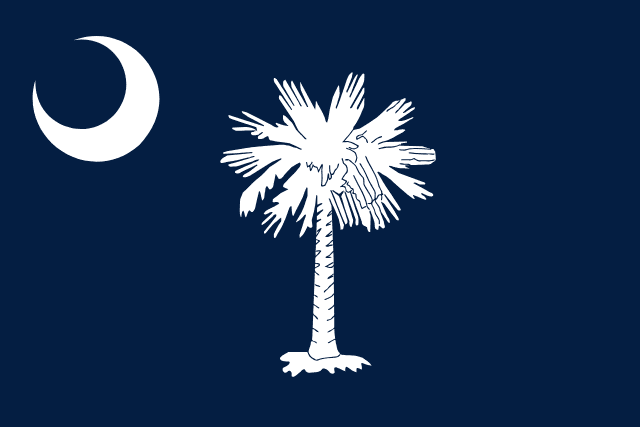
Explore the South Carolina Masonic collections, including state outline gear, Freemasons wordmarks, and Under the Palmetto.

Recognition status: United Grand Lodge of England, Foreign Grand Lodges, which lists the Grand Lodge of South Carolina and lists no Prince Hall grand lodge for the state. Prince Hall founding of 1868, the military lodge on Morris Island, Paul Drayton and Union Lodge No. 1, Lewis Hayden and Hayden Lodge No. 8, the sovereign declaration of 1872 under George E. Johnston, the early lodges at Charleston, Columbia, Walterboro and Sumter, and the seat at 2324 Gervais Street: Most Worshipful Prince Hall Grand Lodge of South Carolina, its own published history. The 155th Annual Session of December 2023: International African American Museum, Charleston. Mainstream formation of 1787 and Solomon’s Lodge of 1734: Grand Lodge of South Carolina and the lodge’s own record. The Supreme Council founded at Charleston on May 31, 1801: Supreme Council, Southern Jurisdiction. The Mississippi vote of February 2026: Christopher Hodapp, Freemasons for Dummies. Consulted August 11, 2026. The address of the mainstream grand lodge is not stated here because we have not confirmed it. State outline simplified from Natural Earth public domain boundary data.

Grand Lodge of South Carolina

The Grand Lodge of South Carolina is recognized by the United Grand Lodge of England.

The Grand Lodge of South Carolina traces its founding to 1787, when the Ancient Grand Lodge of South Carolina was instituted by five Ancient York Mason lodges, and to the 1736 Provincial Grand Lodge, from whose line the "Modern" Grand Lodge descended. The two grand lodges eventually merged in the nineteenth century, creating the single body that has governed South Carolina Masonry since. Mordecai Gist, Revolutionary War general who served with distinction at the Battle of Camden and later settled in Charleston, was Grand Master of the Ancient Grand Lodge in 1791 and signed the address presented to George Washington during his Southern tour.

Albert G. Mackey (one of the most influential American Masonic scholars of the nineteenth century) was based in Charleston and served as Grand Secretary of South Carolina for decades. Mackey's encyclopedic works on Masonic law, symbolism, and history, including his Encyclopaedia of Freemasonry (first published in 1874), remain foundational reference works in American Masonic scholarship. The concentration of Masonic intellectual activity in Charleston during the middle decades of the nineteenth century, with Mackey producing his major works and the Scottish Rite Supreme Council headquartered in the same city, gave Charleston a position in American Masonic culture that has no parallel in any other Southern city.

South Carolina is among the small number of US grand lodges that do not formally recognize a UGLE-affiliated Prince Hall grand lodge. Visiting Masons from PHA jurisdictions should verify recognition status with their home grand lodge before visiting South Carolina lodges.

The Grand Lodge of South Carolina is headquartered in Columbia and today serves lodges across a state whose Masonic tradition (from Solomon's Lodge in 1735 to the 1801 Scottish Rite founding) is among the most historically consequential in American Masonry.

Organization details

Established
Organized 1737
General telephone
(803) 808-4377
General email
[email protected]
Official contact
Official contact page
UGLE listing
Listed as recognised by the United Grand Lodge of England

Unverified office or general contact fields are omitted. Use the official contact route above. A local lodge address is not a Grand Lodge office.

UGLE listing checked November 18, 2026. This check is not the original recognition date or a statement of every jurisdiction’s visitation rules.

Sources for these organization details

Most Worshipful Prince Hall Grand Lodge of Free and Accepted Masons of the State of South Carolina

A Prince Hall grand lodge has worked in South Carolina since 1868. The Most Worshipful Prince Hall Grand Lodge of South Carolina is seated at 2324 Gervais Street in Columbia, held its 155th annual session in December 2023, and is not on the recognition list of the United Grand Lodge of England because the Grand Lodge of South Carolina has not recognized it.

Its origins are in the Civil War and in Boston. The grand lodge's own history records that one of the earliest known lodges of Black Masons in the state was said to have been established by soldiers of the 54th Massachusetts Infantry Regiment stationed on Morris Island at Charleston. That regiment is the one that assaulted Battery Wagner on Morris Island in July 1863. The grand lodge states the connection carefully rather than as settled fact, and this page follows it in that.

What is firmer is what followed the war. In 1866 Paul Drayton, a Past National Grand Master, established Union Lodge No. 1 at Charleston. In the same year Lewis Hayden helped establish Hayden Lodge No. 8 under the authority of the Prince Hall Grand Lodge of Massachusetts. Hayden had escaped slavery in Kentucky, run a station of the Underground Railroad in Boston, and served as Grand Master of Prince Hall Masons in Massachusetts, and his name on a Charleston lodge in 1866 is a fair measure of how quickly the northern Prince Hall jurisdictions moved into the defeated Confederacy.

By 1868 the lodges petitioned to form a grand lodge, and that is the year the institution observes. Lodges followed at Columbia, Walterboro and Sumter. In 1872, under Grand Master George E. Johnston, the body established itself as a sovereign jurisdiction under its own authority rather than under a national one.

It remains a substantial institution. Its annual session in December 2023 gathered at Charleston, with members attending service at Mother Emanuel A.M.E. Church and marching from the church to the International African American Museum.

The Grand Lodge of South Carolina has not recognized it, and there is no recognition of any kind between the two. Mutual recognition spread through the United States after Connecticut moved first in 1989, and by February 2026 only two states were left without it. In that month the Grand Lodge of Arkansas voted to recognize its Prince Hall counterpart and the Grand Lodge of Mississippi voted against doing so. South Carolina and Mississippi are now the last two.

For a visitor the position is plain. There are two grand lodges in South Carolina with long and separate histories, and they are not in amity. A Mason should ask his own grand lodge where it stands before attending either.

Organization details

Established
Formed 1868
General telephone
(803) 254-7210
General email
[email protected]
Official contact
Official contact page

Unverified office or general contact fields are omitted. Use the official contact route above. A local lodge address is not a Grand Lodge office.

Sources for these organization details

Visiting South Carolina as a Masonic Traveler

Solomon's Lodge No. 1 in Charleston is among the oldest Masonic lodges in the United States, with a continuous history stretching to its 1735 charter. The lodge meets in Charleston's historic district and welcomes visiting Masons. Its longevity (nearly three centuries of continuous operation) makes it one of the most significant Masonic destinations in the country.

The site of the 1801 founding of the Supreme Council of the Scottish Rite, Southern Jurisdiction in Charleston is a landmark in the history of the Scottish Rite worldwide. The Scottish Rite Temple in Charleston (home to the Valley of Charleston) preserves the tradition of the city that gave the Southern Jurisdiction its origin. The House of the Temple in Washington, D.C., to which the Supreme Council eventually moved its headquarters, began in this Charleston tradition.

Charleston's well-preserved antebellum architecture and its National Historic Landmark designation make it one of the most architecturally rich cities in the American South, and the concentration of early American Masonic history in the city, from Solomon's Lodge to the Scottish Rite founding to Washington's 1791 Southern tour, gives it unusual depth for Masonic travelers. The Heyward-Washington House, one of the historic properties Washington stayed at during his 1791 visit, is preserved and open to the public.

The Grand Lodge of South Carolina offices in Columbia maintain extensive archives, including records connected to Albert Mackey's scholarly work and to the dual grand lodge period of the late eighteenth and early nineteenth centuries. Visiting Masons should contact the Grand Lodge of South Carolina at scgrandlodgeafm.org for current lodge directories and visiting protocols.

The 1801 founding document of the Supreme Council, Scottish Rite, Southern Jurisdiction is preserved in the Supreme Council archives now in Washington, D.C., though Charleston's Masonic community maintains its own historical collections related to the founding. The Gibbes Museum of Art and the Charleston Museum (among the oldest museums in the United States) preserve Charleston's broader cultural and historical context, within which the Masonic community was deeply embedded from the colonial period forward.

Find a lodge in South Carolina

Browse all 525 local listings

Appendant Masonic Bodies in South Carolina

The Scottish Rite Southern Jurisdiction was founded in South Carolina. On May 31, 1801, eleven Masons met in Charleston to constitute the Supreme Council of the Ancient and Accepted Scottish Rite, Southern Jurisdiction; the document signed in Charleston that morning is the origin of the largest Masonic appendant body in the world. The Supreme Council eventually moved its headquarters to Washington, D.C., but Charleston's place as the SJ's founding city is permanent. Active Valleys in Charleston, Columbia, and Greenville carry that heritage forward, with the Valley of Charleston operating in the city where the Supreme Council itself was born.

Shriners International serves South Carolina through the Omar Shrine in Charleston and the Jamil Shrine in Columbia, supporting the Shriners Children's hospital network across the state.

York Rite bodies (Chapters of Royal Arch Masons, Councils of Cryptic Masons, and Commanderies of Knights Templar) operate statewide, with several bodies in Charleston and other communities whose histories reach to the early republic and the colonial period.

The Order of the Eastern Star, DeMolay International, and Job's Daughters International operate in South Carolina, extending Masonic fellowship to family members of Master Masons throughout the state.

Explore More

Two grand lodges work in South Carolina. The Grand Lodge of South Carolina, formed in 1787, is recognized by the United Grand Lodge of England. The Most Worshipful Prince Hall Grand Lodge of South Carolina, founded in 1868 and seated at Columbia, is not.

The two have never recognized each other. England follows the mainstream grand lodge of each state on Prince Hall recognition, which is why the second does not appear on the English list.

South Carolina and Mississippi are the only United States jurisdictions in which no recognition of any kind exists between the mainstream and Prince Hall grand lodges. Arkansas, the third at the start of 2026, voted to recognize its Prince Hall counterpart in February of that year; Mississippi voted against in the same month.

A visitor should confirm the current position with both grand lodges rather than rely on this page.

Sources & References

United Grand Lodge of England, Foreign Grand Lodges (https://www.ugle.org.uk/about-us/foreign-grand-lodges). Recognition status of the Grand Lodge of South Carolina.

Grand Lodge of Ancient Free Masons of South Carolina (https://scgrandlodgeafm.org/). Official site; founding history and the 1801 founding of the Scottish Rite SJ in Charleston.

Conference of Grand Masters of Masons in North America / COGMNA (https://www.cogmna.info/). Inter-jurisdictional recognition and amity lists.

Albert G. Mackey, Encyclopaedia of Freemasonry (1874). Foundational Masonic reference work produced by South Carolina’s Grand Secretary; primary source for American Masonic terminology and law.

Supreme Council, 33°, Southern Jurisdiction (https://scottishrite.org/). Historical context for the 1801 Charleston founding of the Scottish Rite SJ.

Skip to content